
For Democrats, only some blue lives matter

By: MSN

Good read. And true
 S E E D E D C O N T E N T
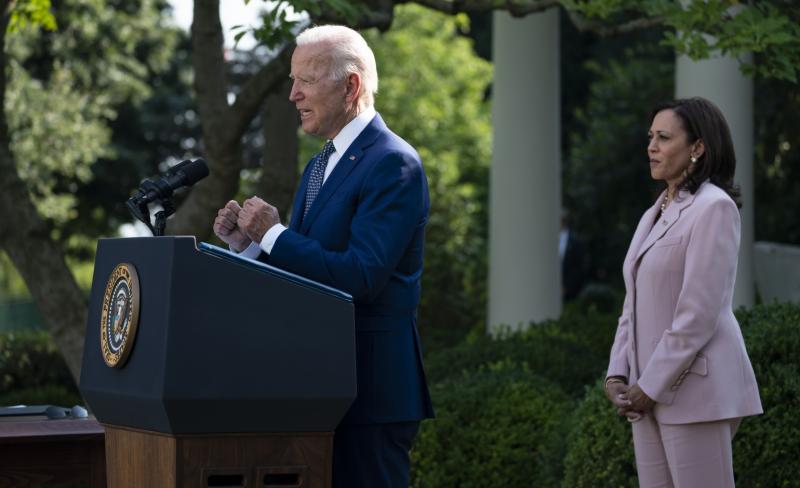
President Joe Biden signed legislation giving the men and women of the Capitol Police and the Washington, D.C., Metropolitan Police Department the Congressional Medal of Honor last week. But no mention was ever made of the thousands of other law enforcement officers who put their lives on the line protecting cities throughout the violent riots of 2020.
 © Provided by Washington Examiner
"Police officers are not what you do," Biden said of the officers who defended the Capitol on Jan. 6. "It is who you are. … It's not some hyperbole to suggest 'duty, honor, service.' That's who you are. … And America owes you a debt we can never fully repay."
The nation does owe the officers who faced down a violent mob at the Capitol on Jan. 6 a debt of gratitude. But what about the debt we owe to the federal officers who faced a much larger, much more violent mob, night after night, while they protected the federal courthouse from rioters in Portland, Oregon?
What does America owe them? Nothing, apparently, since Biden did not make one mention of them in his speech.
Perhaps he has forgotten or doesn't care or doesn't think it is in his political interests to remember that, night after night, law enforcement officers risked their lives protecting a federal building from a violent mob of more than 4,000 people.
"It's scary … when the crowd is shaking the fence and on the other side of that fence are people who want to kill you because of the job we chose to do and what we represent," one law enforcement officer told the Associated Press.
Each night law enforcement officers would be pelted with commercial-grade fireworks, rocks, cans of food, and metal ball bearings fired by slingshots. The one night the Associated Press stayed with law enforcement officers in the courthouse, six officers were injured, one was hospitalized, and several agents had lingering vision problems from the lasers pointed at their eyes by the rioters.
"My friends have been hit in the head with hammers. I know people who have been shot with fireworks," another law enforcement officer told the Associated Press. "It's disgusting."
Where is the Congressional Medal of Honor for these officers? Or for those others who protected government and private property in scores of cities across America? Do 'duty, honor, service' not also define them? Did they not also risk their lives to protect an institution of democracy? And what about the other more than 2,000 law enforcement officers who were injured fighting riots, looting, and arson in the wake of George Floyd's death?
The obvious fact is, Biden and his fellow Democrats have no use for law enforcement officers who can't be used as a political prop to remind the public about Jan. 6. It was, as we have editorialized, a disgraceful and shocking event, but Democrats see it as a godsend for the political hay they can make of it. That is why even as Democrats praise the Capitol Police out of one side of their mouths, they call for police to be defunded out of the other.
On the very same day Biden was in the White House praising the Capitol Police and using the Congressional Medal of Honor as a political prop, Missouri Democratic Rep. Cori Bush was outside the Capitol telling CBS, "Defunding the police has to happen. We need to defund the police and put that money into social safety nets because we're trying to save lives."
That is the Democratic Party's real position on what the nation owes its police. It thinks it owes them nothing, or worse than nothing. And it thinks those officers owe it a publicity stunt. Democrats believe that police should be defunded so we can spend more money on ineffective social programs, even as crime skyrockets under their watch.
The only exception to that rule is when the police become politically useful — that and when it's private security officers who protect Democratic politicians.
Those officers should be honored and given medals. But if you are an average police officer protecting an average person, Democrats have no use for you.
Washington Examiner Video
Tags:Editorials
Original Author:Washington Examiner
Original Location:For Democrats, only some blue lives matter

Yeah about those other officers.........................................
yeah, about that false equivalency...
Yeah, about Democrat and the left's blatant hypocrisy....
Jan 6th is all the Democrats have. They policies are for shit and will get them voted out at midterms; and they know it. They need to keep as much of the nation's interest on Jan 6th as possible to try and deflect attention away from the downward spiral this country is in.
I know, the double standard is pretty messed up. Big time!
Our thoughts are with the families of the two police officers shot in what sadly passed for an American city Saturday:

(Ella French, 29. Chicago Police: murdered by thugs)
Yep, sadly almost every day in Chiraq.
And the left is still whining about what happened one day in January where no cops were murdered.
Amazing!
That's what they want to run on.
There is your answer. It's not a color of a person. It's a type of person.
The Mafia are thugs, too.
LMAO....I love you Perrie!
Barely a blip on the national radar. She's just a young mother murdered doing her job. No one will riot. . The President won't call for a national dialogue about her murder, if he even bothers to mention her. And the cultural leaders of this country are too busy imagining they heard a racial slur at a baseball game and calling for people to go jail over it to care about a young mother being murdered, since it's not politically exploitable.
That is exactly where America is in 2021.
Spot on!
The area where the two cops were shot Saturday is Englewood, one of the most dangerous neighborhoods in the city, and almost certainly one of the most dangerous in the country.
This is Englewood in the 1950's. At that time it was one of the most vibrant neighborhoods in America outside a downtown (Englewood is about 9 miles from downtown Chicago) and mostly white.
Gee, what changed since the splendid decade?
So in the 25 years from 1955 to 1980 Englewood went from being predominantly white to being 98% black. I know this story well because when I was a kid my family lived in west Englewood. I went to a Catholic grammar school where there were no black kids at all. In the next 6 or 7 years the area became all black. What was going on? ALL the white people were moving out due to fear of black people , exacerbated by "blockbusting" . Blockbusting was when real estate agents would frighten white homeowners by telling them their property values would go down if many more blacks moved into the neighborhood. So to not be "caught holding the bag" so to speak, many whites sold and moved out to beat the rush.
Is it really a surprise that a neighborhood goes bad after one group is told by another "we hate you so much we have to get as far away from you as we can" ?
Why would they fear black people?
BTW, I agree with you. Some are not fit to talk to.
You dont know?
I doubt if hate had anything to do with it. But perhaps they could sense what the future would bring
Does anyone have an answer? How about our readers? Anyone want to take that one on?
JR says they moved out due to fear of black people. I ask why?
They don't move out of an Asian neighborhood because of fear of Asians. Nor do they flee Hispanic or Jewish area's.
So again - whay did they move out "due to fear of black people?"
You should probably stop now Vic, before you make a mistake.
More like fear of crime and getting shot.
There is no mistake. I'm asking why people fear blacks and not others.
No answer to that?
The answer may lie with Chicago 2021
Very close Greg. I think you know, I'm looking for a bit more.
(Can't tell you how much I like that avatar)
I'll just put it like this. Integrated neighborhoods rarely have the crime and violence problems that segregated neighborhoods do. The black people who were willing to move onto an all white block were the EXACT people the whites should have welcomed , people who wanted a better environment for their children. Black people who were the first black family on the block would have gone out of their way to keep their property up so as to not turn the neighbors against them. It didnt matter. There were whites who would not live next door to a n----- for any reason. Why, because they were racist.
So we end up with all black neighborhoods without good jobs, without good schools , and where gangs can take hold. It's not rocket science.
If American neighborhoods were fully integrated the gang problem wouldnt be a tenth of what it is.
Let me answer that.
First of all, you have to put it in the context of the time.
You asked:
Many neighborhoods had anti-Jewish covenants that prohibited sales to Jews. Over time people decided not to enforce that. Many small villages in the town where my kids grew up had such covenants and they still remain there as a reminder of the bigotry that once was there.
Asians live among themselves and there many fewer of them.
As for Hispanics... come on Vic....Did you miss "West Side Story"? Hispanics were not welcome.
I lived in one of those neighborhoods where blacks were moving in, and I can tell you that it was sheer bigotry that was going on. When my parents wanted to sell, because they owned a shop in a town that was in another county, they were threatened that if they sold to a "Nigger", "Jungle bunny", that their children were in danger. They still have that letter, that was tossed through our front window via a rock.
Perrie, It has been a while since you and I have had a conversation. Too long, perhaps. You always have a positive way of viewing social issues and I know you believe in what you say. However, I doubt you are going to agree with me on JR's observation.
First let me answer your statements:
Many neighborhoods had anti-Jewish covenants that prohibited sales to Jews. Over time people decided not to enforce that. Many small villages in the town where my kids grew up had such covenants and they still remain there as a reminder of the bigotry that once was there.
There is without doubt bigotry in the treatment/acceptance of all knids of people. What you point out above was a problem, but less so now. To answer my question of JR - NOBODY fears Jews. So why?
Asians live among themselves and there many fewer of them.
Yet they are under assault in west coast inner cities - via blacks specifically. (I'm offering you a hint already)
As for Hispanics... come on Vic....Did you miss "West Side Story"? Hispanics were not welcome.
Yup, West Side Story. Appropriate for it's time, not so now, however. You recall it was kind of the Irish vs the PR's. Again I must say, people don't tend to fear Hispanics or the Irish.
I lived in one of those neighborhoods where blacks were moving in, and I can tell you that it was sheer bigotry that was going on. When my parents wanted to sell, because they owned a shop in a town that was in another county, they were threatened that if they sold to a "Nigger", "Jungle bunny", that their children were in danger. They still have that letter, that was tossed through our front window via a rock.
I lived in a place that once had ethnic hostility. I was told by neighbors who to sell to. I sold my house to a black family. How's that? However none of this answers my question. Why do people fear blacks and not others?
Shall I do the honors? I believe some here are afraid to say it!
I seriously doubt that anyone here is afraid of your comments Vic.
Do you always rationalize racism?
Let me put it right to you....THERE IS A SERIOUS PROBLEM IN THE INNER CITY BLACK COMMUNITY. THE CRIME RATES WHICH SHOW THAT BLACKS ARE COMMITTING WAY BEYOND THEIR SHARE OF CRIME IS WHY PEOPLE FEAR THEM!
You may hate to hear it, but there it is!
Segregated ghettos are entirely due to previous white racism. Entirely. Segregated ghettos are where the gangs that commit the vast majority of "black crime" flourish. Thats why Englewood is one of the most dangerous neighborhoods in America today. Because it was forced to exist as an all black ghetto.
Or are blacks just natural criminals?
We aren't talking about all blacks. We are talking about a tiny percentage of young black men who account for about 35% of all violent crime. Anybody who tries to cover that up is a racist IMO. We will never solve it by not facing it.
Obviously you are not getting a ticket for that. Calling people "racist" means you have nothing!
I'm explaining it to you Vic. I cant force you to understand.
Everyone knows that young black men commit the most street crime. I'm telling you why. Black men have been outsiders in American society since the 1600's. Other than the entertainers and athletes. Yes it is getting better in many ways, but the segregated ghettos with the gangs still exist. The bad jobs still exist and the bad schools still exist.
This is not a "pull yourself up by your bootstraps" situation.
Thanks! I try to always remain upbeat even in tough a subject.
Antisemitism is a problem worldwide today. People fear them in a different way. They think that Jews are trying to take over the world and change "white" culture. Jews are not considered white.
This has been going on for some time. It's because Asians tend to gentrify black neighborhoods, and the resentment is there.
People on LI fear Hispanics. In certain neighborhoods, they have a MS13 gang issue. Drugs are the problem. Same in black communities.
Some people fear blacks. Others do not. I spent 20+ years in a black and Latino neighborhood, and most of the people I engaged with were very nice. About 10% were scum, which made it hard on everyone. If you fixate on that 10% then you are fearful.
So there is a legitimate reason to fear them? Well done John.
Black men have been outsiders in American society since the 1600's. Other than the entertainers and athletes. Yes it is getting better in many ways, but the segregated ghettos with the gangs still exist. The bad jobs still exist and the bad schools still exist.
It was all in the Moynihan Report, way back in 1965. It involves the breakdown of the black family. The problem is that some on the left were in denial and still are.
This is not a "pull yourself up by your bootstraps" situation.
It is time for the black community to address it.
That is news to me
It's because Asians tend to gentrify black neighborhoods, and the resentment is there.
I think it is because the highly civilized Asians are easy targets.
People on LI fear Hispanics. In certain neighborhoods, they have a MS13 gang issue. Drugs are the problem. Same in black communities.
MS 13 isn't really representative of Hispanics, though they merit fear. We shouldn't have MS 13 in this country.
Some people fear blacks. Others do not. I spent 20+ years in a black and Latino neighborhood, and most of the people I engaged with were very nice. About 10% were scum, which made it hard on everyone. If you fixate on that 10% then you are fearful.
Once someone becomes a victim they will "fixate,"
It's time for everyone to address it.
Moynihan argued that the rise in black single-mother families was caused not by a lack of jobs, but by a destructive vein in ghetto culture, which could be traced to slavery times and continued discrimination in the American South under Jim Crow.
Some people want to have destroyed black culture over the course of 2 or 3 hundred years and now take the stance that the victims of racism are solely responsible for curing its pathologies.
Never mind Wikipedia and the lefties who post there, how about the report:
"The fundamental problem, in which this is most clearly the case, is that of family structure. The evidence — not final, but powerfully persuasive — is that the Negro family in the urban ghettos is crumbling. A middle class group has managed to save itself, but for vast numbers of the unskilled, poorly educated city working class the fabric of conventional social relationships has all but disintegrated. There are indications that the situation may have been arrested in the past few years, but the general post war trend is unmistakable. So long as this situation persists, the cycle of poverty and disadvantage will continue to repeat itself.
The thesis of this paper is that these events, in combination, confront the nation with a new kind of problem. Measures that have worked in the past, or would work for most groups in the present, will not work here. A national effort is required that will give a unity of purpose to the many activities of the Federal government in this area, directed to a new kind of national goal: the establishment of a stable Negro family structure."
Some people want to have destroyed black culture over the course of 2 or 3 hundred years and now take the stance that the victims of racism are solely responsible for curing its pathologies.
LBJ and welfare comes immediately to mind!
This is from the Klan:
If that were the case, then any highly civilized people would be at risk. Bigotry and resentment run deep between these two communities.
And neither are the gangs in black neighborhoods.
So maybe Jews should hate Germans?
By their own admission half of Americans are racist. Welfare doesnt cure that.
I am not afraid of bullshit. I just scoop it up with a shovel and get rid of it.
I can speak for one city. Detroit.
The City of Detroit was the fifth largest city in the county for most of my formative years. City population started to drop precipitously after the 67 riots. I have friends who grew up there that talk about military APC's patrolling their neighborhood streets during the riots. Put racism aside .... who wants to raise a family around that no matter what the cause? Who would want to operate a business around that?
Not me and not a lot of people who left the city proper and began a massive expansion of the burbs for Detroit. There certainly was a racial component involved but to hang the entire cause on racism alone is an extremely obtuse analysis of the issue.
Everyone is racist to some degree John.
Some of the worst racists are the ones calling everyone else racist.
Suburbia = commuting. Most people don't work in their neighborhoods anymore anyway, regardless of race.
But let's talk about those schools. Don't you find it odd that we have zero white liberals protesting all those terrible schools? As long as a school has an approved name, it doesn't seem to matter that the kids don't learn anything. I wonder why that is...
(That's sarcasm. I'm not really wondering at all.)
'THEY' weren't moving out of a 'black' neighborhood.
'THEY' were moving out of a predominantly white neighborhood after some black people started 'Movin' on up'.
It then BECAME a black neighborhood.
Glad I could help clear that up.
First of all, that's a strawman Vic.
Secondly, John answered your quesion in his post:
BTFW Vic, why do you think that most big cities have a 'Chinatown'? It can't be that whites segrigated Asians just like they did Blacks and Latinos and Native Americans could it?
Blacks tend to self segregate
Yes, it is surprising. No one forced Englewood to turn into a shit hole. The whites leaving it sure as hell are not responsible. Ever consider it could be the people moving in regardless of skin color? I know the left doesn't think African Americans are responsible for anything concerning their living conditions; but if Englewood is 98% black then they control their own fate.
I am well aware of block busting. Are you aware that real estate agents were making a self fulfilling prophecy? It happened in enough neighborhoods that it became it's own reality. The agents get the houses cheap (many times below market value) and were able to flip them fast. It just wasn't white flight. It was also African Americans moving in for the cheaper housing; and also to live in an African American neighborhood.
I can speak from experience on the last part. Lived in Detroit, MI for 6 months- probably the worst 6 months of my childhood. Nice house in what looked from the outside to be a decent neighborhood; but I was tall, rail thin, blond haired and blue eyed- in other words not welcome (I really want a genetic profile ID card. Would make my life so much easier if could prove my American mutt status. Of course if would want the edges sharpened so it could cut the fingers of any moron I had to show it to.). My father made the mistake of thinking he could cash in on one of the cheap houses; I received enough rides from police home after beatings that they didn't even bother to ask me where I lived. My dad was determined to stick it out until my younger brother got beaten, and his first police ride home. House sold in less than a month; and we were gone to the West side of the state (far more conservative- you can take that as white- though it is changing).
That is the problem with the left. White flight was real; but sometimes there was a reason behind it that was real as well.
When the 10% try to alter your physical features on a regular basis; and the other 90% go on full ignore mode to not draw attention to themselves, you would be fearful too.
Sorry, it gets to me when people try to downplay this type of thing. That "What doesn't kill us makes us stronger" is complete BS. I learned more about what makes people different the hard way growing up than anything else.
Did you know that the Nords and the Germans have a long history of hating each other? Found that out being bullied in Minneapolis. All white neighborhood; but there was a large Nordic population. Being a lone family with a mostly German ancestry didn't sit well. We were all blond haired and blue eyed; we should have gotten along great according to leftist dogma. Reality screams something different. (Can't leave out the Poles and Germans either; but that was a split. Two large families- one that couldn't stand Germans- and was a constant threat. The other was the best friends of our family for the entire time in Minneapolis.)
I already mentioned my time in Detroit in post 6.2.35. Lovely place- I will never set foot there again, no matter how many Tigers and Lions tickets my friend offers me.
Think it is just racial? Social status has a lot to do with it as well. Bullying didn't end when we moved to West Michigan. Nerdish tall skinny kid that can run likes to play football- jocks take instant disliking to him. Make his life miserable from grade school until freshmen year of high school. Still take them over what happened in Detroit and Minneapolis. Their bullying was mostly verbal turning me into a social outcast. It only turned physical when they were trying to improve their standing in their clique. Didn't have to be driven home by police once after their beatings.
I understand some people can live anywhere and get along with everyone. Good for them. For those of us that grew up the hard way however; we have a right to distrust everyone. Our fear is based on experience. So please excuse us if we look for the bad in everyone to start.
If you want to peg this as a derail so be it. I just get sick of people that seem to think that everyone has the same damn experiences.
I dont know what you are talking about but it is not the same thing I am talking about.
what is wrong with you?
I have talked about a little bit on Newstalkers, but only a little because it's not that interesting in and of itself, but when I was a teenager, I had very direct experiences with changing neighborhoods. My parents were lower working class , had 5 kids, and did not own a house (they would a little later) . My mother took a job working in a downtown insurance company because she wanted her 5 kids to go to Catholic grammar school (and high school). So we were renters, and with five kids its not that easy to find an apartment . In a period of 8 years we moved three times , always within the same general area (within a few miles) going from one changing neighborhood to another and always being one of the last white families to leave the block.
The time would come when it would be dangerous to be white in a changing neighborhood , and there were gang fights between whites and blacks as the "tide" of going from white to black would surge across an 8 or 10 block area it didnt happen all at once, it was gradually almost block by block as you would imagine a "battle" being. Thank god in those days guns were a rarity, even for gangs. No one was that worried about being shot although there was a time I was walking with a couple of my friends over to another friends house and we were shot at by a group of black guys in a drive by. If you have seen the movie "A Bronx Tale" and remember the racial scenes in that movie that is roughly what I am talking about, except in my case the result was not that dramatic and we were Irish kids and not Italian.
In one of our "gang fights" with blacks there was a gun involved and two of my friends were shot by a black guy. Fortunately they both survived chest wounds.
There were many things that happened in our neighborhood related to race, but I wont write a book about it here. I'll just give one more example. A year later or so my brother was sitting in his first car (which I dont remember well but I'm sure it was a "heap") with his girlfriend on the street in front the two flat where we lived. It was night time, and at some point a black guy with a gun approached them and carjacked them , stole his car.
From that point on my brother became a racist, which he is to this day. He is not a white nationalist or anything like that, he's just a garden variety racist who disparages black people pretty much whenever the subject of a black person comes up in a conversation. His children are the same way to varying degrees, and his grandchildren probably will be too ( the oldest of his grandchildren are just now reaching the age when they would manifest racism if it is there in their beliefs).
I did not become a racist, even though I lived through all the same experiences as the other white kids in the neighborhood. I was always more interested in history than most of my friends and I was able to understand why what was happening was happening in a way that most of them could not.
My father grew up there.
If I were in Chicago, it would be safer for me to travel to Iraq then visit his childhood home.
I am in Chicago and I am not afraid at all.
Oh I see what you are saying. The area where your father grew up is a "bad neighborhood" now.
Are there no bad neighborhoods in Iraq?
What do you thinks the odds are you could walk from 52nd and Morgan to Visitation on Garfield without getting hassled?
I'm not sure what that has to do with what I said, but since you know the streets you know that from 52nd and Morgan to Visitation church is a little less than a half a mile. Whether or not I was hassled would probably depend on whether there were any little gangbangers hanging out along the way.
I'm not sure what that has to do with what I said
You said you were not afraid to visit Englewood. I'm not saying you would die, but if you tried the walk I propose more than a couple of times, you will almost certainly have problems. Why would anyone subject themselves to that kind of risk? My dad made that walk all the time as an unaccompanied kid without issue. It would be insanity for you to do that walk everyday now.
Pretty much anywhere in America one can go for a half mile walk every day without any worry. To do that there is to have a death wish. It's amazing to me that is just accepted in Chicago.
I dont think 52nd and Morgan is technically in Englewood, but its close enough for these purposes.
I would not walk most streets in Englewood to go joy walking, as it is dangerous to some extent, although obviously hundreds of people walk those streets every day , most often without being attacked or robbed or shot.
There are white people who go into bad neighborhoods every day. They work or own businesses there or they go there to buy something or do some other sort of business there. Are they afraid? Not really. I'm not saying it is "safe" in a gang neighborhood, especially not after dark, but , I dont really know quite what your point is.
Most neighborhoods in Chicago are not dangerous. There are 2.7 million people living in the city. Englewood has 40,000 people. There are other bad neighborhoods besides Englewood to be sure , but there are a couple hundred thousand white people who live on the south side of Chicago. Do you think they all would live in "bad neighborhoods"? Its kind of silly.
No, I don't. I know some parts are very nice.
Englewood is down to 25,000 people. 500 people will be shot there this year. If those numbers don't bother you, I don't know what will.
By comparison, about 500 kids under 17 have died of Covid out of 74 million in the last year and a half. People are panicking about the dangers of Covid to children. Compare the risks and tell me which is more dangerous?
Would you feel safer where something terrible happens to 500 out of 25,000 people? Or 500 out of 74 million?
I have never said that what happens in Englewood doesnt bother me.
Elsewhere on this article Vic brought up the Moynihan Report, with the idea of placing all the blame for inner city blacks plight on the black people themselves.
I dont think the Moynihan Report does that. It acknowledges that black social dysfunction in the ghetto is a result of slavery and 100 years of Jim Crow. In other words, racism.
Everyone can agree that young black men should not be on the street all the time breaking the law. Why have black people historically in America been considered to be "the other" ?
20 or 30 years ago , before he lost his mind, D'nesh D'Souza wrote a book called The End Of Racism. In this book D'Souza talks at length about black social pathology. And one of the conclusions he asserts is that some inner city blacks have an "oppositional" culture. They dont want to "assimilate" to white standards of behavior. This was probably most famously seen in recent decades in the phenomenon of blacks students criticized for "acting white."
Now, in another book the black author Glenn Loury gave a further explanation for why blacks have been always considered to the be "the other" , a group apart from mainstream US life. And when we look at both these perspectives we can begin to see the issue with the long lasting lack of inner city black assimilation.
from The Anatomy Of Racial Inequality by Glenn Loury page 68
Young black men , and blacks in general continue to be a stigmatized "other" in America (as do other racial minorities to varying degrees, but it is not exactly the same because only blacks have the inherited "dishonor" of having been slaves).
Until we can resolve this issue there will be no lasting racial accord.
I have asked this question at other places - why was Abraham Lincoln a racist until his later years? He didnt even know any black people for much of his life.
Lincoln was "taught" that the Africans were inferior BECAUSE they were slaves. If they were the equal to whites they would have escaped or avoided mass slavery.
Anyone have the answer? How about those in the back row?
"'Our' many readers"?
AND for those of you who do not understand what DEFUND means: