
Why I Won't Support Spending Another $3.5 Trillion - WSJ

By: Joe Manchin (WSJ)



 S E E D E D C O N T E N T
The nation faces an unprecedented array of challenges and will inevitably encounter additional crises in the future. Yet some in Congress have a strange belief there is an infinite supply of money to deal with any current or future crisis, and that spending trillions upon trillions will have no negative consequence for the future. I disagree.
An overheating economy has imposed a costly "inflation tax" on every middle- and working-class American. At $28.7 trillion and growing, the nation's debt has reached record levels. Over the past 18 months, we've spent more than $5 trillion responding to the coronavirus pandemic. Now Democratic congressional leaders propose to pass the largest single spending bill in history with no regard to rising inflation, crippling debt or the inevitability of future crises. Ignoring the fiscal consequences of our policy choices will create a disastrous future for the next generation of Americans.
Those who believe such concerns are overstated should ask themselves: What do we do if the pandemic gets worse under the next viral mutation? What do we do if there is a financial crisis like the one that led to the Great Recession? What if we face a terrorist attack or major international conflict? How will America respond to such crises if we needlessly spend trillions of dollars today?
Instead of rushing to spend trillions on new government programs and additional stimulus funding, Congress should hit a strategic pause on the budget-reconciliation legislation. A pause is warranted because it will provide more clarity on the trajectory of the pandemic, and it will allow us to determine whether inflation is transitory or not. While some have suggested this reconciliation legislation must be passed now, I believe that making budgetary decisions under artificial political deadlines never leads to good policy or sound decisions. I have always said if I can’t explain it, I can’t vote for it, and I can’t explain why my Democratic colleagues are rushing to spend $3.5 trillion.
Another reason to pause: We must allow for a complete reporting and analysis of the implications a multitrillion-dollar bill will have for this generation and the next. Such a strategic pause will allow every member of Congress to use the transparent committee process to debate: What should we fund, and what can we simply not afford?
I, for one, won’t support a $3.5 trillion bill, or anywhere near that level of additional spending, without greater clarity about why Congress chooses to ignore the serious effects inflation and debt have on existing government programs. This is even more important now as the Social Security and Medicare Trustees have sounded the alarm that these life-saving programs will be insolvent and benefits could start to be reduced as soon as 2026 for Medicare and 2033, a year earlier than previously projected, for Social Security.
Establishing an artificial $3.5 trillion spending number and then reverse-engineering the partisan social priorities that should be funded isn’t how you make good policy. Undoubtedly some will argue that bold social-policy action must be taken now. While I share the belief that we should help those who need it the most, we must also be honest about the present economic reality.
Inflation continues to rise and is bleeding the value of Americans’ wages and income. More than 10.1 million jobs remain open. Our economy, as the Biden administration has correctly pointed out, has reached record levels of quarterly growth. This positive economic reality makes clear that the purpose of the proposed $3.5 trillion in new spending isn’t to solve urgent problems, but to re-envision America’s social policies. While my fellow Democrats will disagree, I believe that spending trillions more dollars not only ignores present economic reality, but makes it certain that America will be fiscally weakened when it faces a future recession or national emergency.
In 2017, my Republican friends used the privileged legislative procedure of budget reconciliation to rush through a partisan tax bill that added more than $1 trillion to the national debt and put investors ahead of workers. Then, Democrats rightfully criticized this budgetary tactic. Now, my Democratic friends want to use this same budgetary tactic to push through sweeping legislation to make “historic investments.” Respectfully, it was wrong when the Republicans did it, and it is wrong now. If we want to invest in America, a goal I support, then let’s take the time to get it right and determine what is absolutely necessary.
Many in Washington have convinced themselves we can add trillions of dollars more to our nearly $29 trillion national debt with no repercussions. Regardless of political party, elected leaders are sent to Washington to make tough decisions and not simply go along to get along.
For those who will dismiss my unwillingness to support a $3.5 trillion bill as political posturing, I hope they heed the powerful words of Adm. Mike Mullen, a former chairman of the Joint Chiefs of Staff, who called debt the biggest threat to national security. His comments echoed the fear and concern I’ve heard from many economic experts I’ve personally met with.
At a time of intense political and policy divisions, it would serve us well to remember that members of Congress swear allegiance to this nation and fidelity to its Constitution, not to a political party. By placing a strategic pause on this budgetary proposal, by significantly reducing the size of any possible reconciliation bill to only what America can afford and needs to spend, we can and will build a better and stronger nation for all our families.
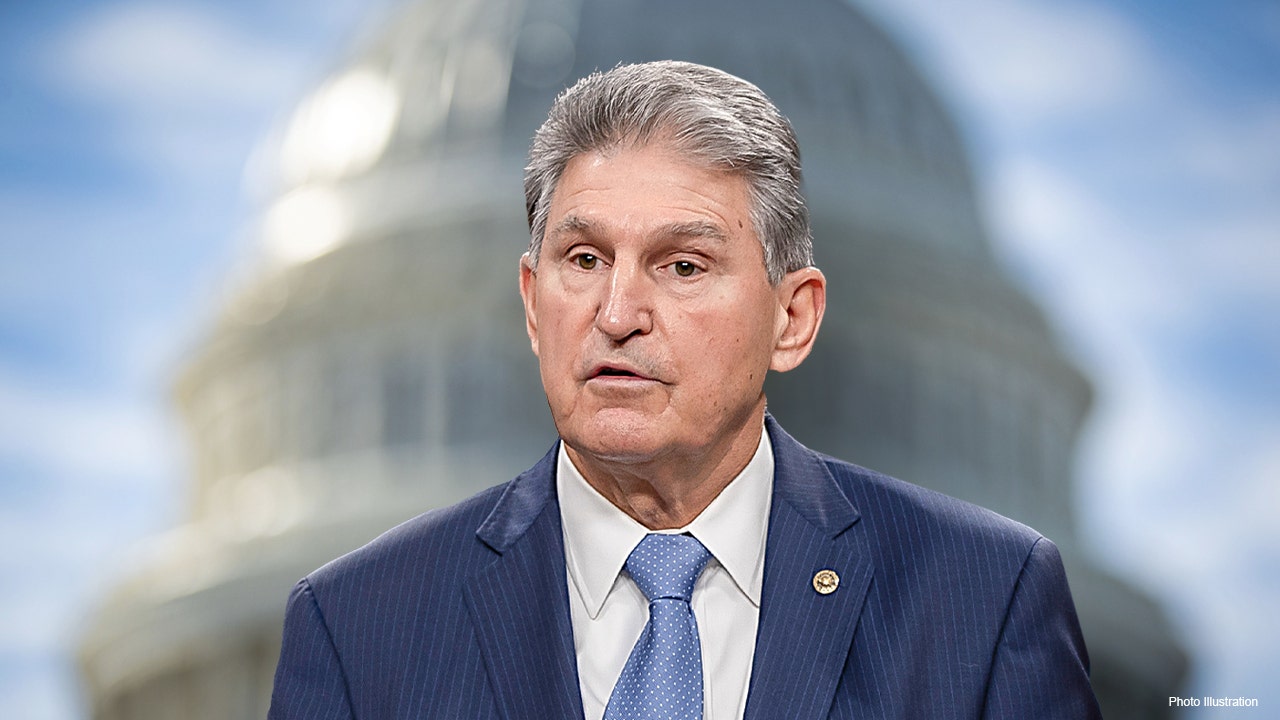
Mr. Manchin, a Democrat, is a U.S. senator from West Virginia.

Tags
Who is online
211 visitors
Sept. 2, 2021 3:10 pm ET
It sounds like Manchin has taken a stand. We can all give thanks.
Sorry, I don't trust him. He never should have voted to send the bill to reconciliation in the first place.
Letting both porkulus "infrastructure" bills die in the House would be a fitting end; and show how stupid the far left really are by not taking the bipartisan 1.5 trillion dollar bill that was offered.
Instead we now have to rely on Manchin to not flip/flop again if they negotiate a slightly less costly mult trillion dollar piece of pork. He can still claim victory by getting the total dollar amount down.
Never trust a politician; especially a Democrat!
Whatever happens now we have to concede that the dems got a lot out of their 50-50 split in the Senate so far.
In other words, the Republicans stood together in 2017, and Manchin lacks the balls to stand with his party now. No surprise.
This has nothing to do with the national debt, which is not an issue. This has to do with Manchin being anti-government as his West Virginia constituents would like to see.
They will pass something , he says much less than 3.5. I think 2.5 probably sounds about right from Manchins perspective.
Ya John, they were only allowed 1 shot at reconciliation. The democrats got 2 this year. They aready used one.
and Manchin lacks the balls to stand with his party now.
Manchin is actually standing up for the American people.
This has nothing to do with the national debt, which is not an issue.
REALLY?
They will pass something , he says much less than 3.5. I think 2.5 probably sounds about right from Manchins perspective.
You predict 2.5 Trillion? Ok, we shall see.
From the article: "This positive economic reality makes clear that the purpose of the proposed $3.5 trillion in new spending isn’t to solve urgent problems, but to re-envision America’s social policies."
Also known as pandering for votes.
I think it takes more balls to go against your party and stick with what you actually believe in then to just go along with the group.
So, you are a fan of Liz Cheney.
A little what about huh?
I’m not a fan of any politician. Think they are all full of shit. I do however believe that it takes more balls to go against the grain, just like I stated.
It has been around since time immemorial. That people are suddenly aware of 'whataboutism' and then scramble to hide behind 'the topic' which is far more often than not just a collection of partisan opinions posing as 'facts' is laughable.
What are you going to give thanks for, your country is burning up on the West Coast, drowning on the East Coast and your infrastructure is approaching 3rd world status ... oh what to do, throw money at the navy and fight phony culture wars in the Midwest? That's the ticket. /S
That maybe the money people saved might still be worth something.
If you don't fix the roof the next thing to go is the foundation.
I see infrastructure as both bricks and mortar, and, muscles and bones.
Ask her.
A second question to ask on this is will this letter from Joe Manchin end up killing the House vote on the bi-partisan infrastructure bill. While not everything in that bill is good (IMO) it does have monies to fix some obvious issues around the country and should be passed. But there were several far-left in the House who previously stated they would not vote for the bi-partisan bill unless the second bill was also there for the vote. Will they vote to fix the physical infrastructure around the country or will they run away because they don't have their second bill in their pocket?