
A Passel of English Words from Yiddish

By: MerriamWebster


 S E E D E D C O N T E N T
A Passel of English Words from Yiddish

Bubkes
English takes on new words all the time. We've been borrowing liberally from other languages—French, Latin, and Italian to mention just a few—for centuries. More recently, in the last hundred years, we've added many Yiddish words in our melting pot.
What follows is a list of some of the more well-known words of Yiddish origin to have entered English. It should be noted that these are not direct English translations of Yiddish words; they are words from Yiddish that have been sufficiently naturalized in our language to be included in an English language dictionary.
Definition:
: the least amount; also : nothing
About the Word:
The Yiddish word bubkes (also spelled in both English and Yiddish as bupkes or bubkus ) is thought to be short for the colorful kozebubkes , which means 'goat droppings'—something you may want to consider the next time you find yourself saying 'I've got bubkes .'
Example:
"And I got bubkes for alimony and child support. Nice." — Olivia Goldsmith, The First Wives Club , 2008

Chutzpah
Definition:
: supreme self-confidence
About the Word:
Chutzpah is not only one of the most well-known words of Yiddish origin we have in English, it was also one of the first to be borrowed. Its first known occurrence in English dates back to 1867; many of the other Yiddish words we've borrowed don't appear in print until the middle of the 20th century. Chutzpah comes from the Yiddish khutspe , which is itself descended from the Hebrew ḥuṣpāh . Some speakers of Yiddish feel that this word has been diluted in English use, and no longer properly conveys the monumental nature of the gall that is implied. A common non-lexicographic way to define chutzpah is to say that it is exemplified by the man who kills his parents and then asks the court for mercy, on the grounds that he is an orphan.
Example:
"The turgidity of Clifford's presentation makes it sadistic to dwell on the analysis, but one must, one absolutely must, since such chutzpah requires recognition." — William F. Buckley, Aberdeen American News , 12 June 1973
Glitch
Definition:
: a usually minor malfunction
About the Word:
It should be stated at the outset that the parentage of glitch is not assured, something we should not hold against so useful a word. Merriam-Webster states (as do many other dictionaries) that the word is "perhaps from Yiddish glitsh ,' a word that means 'slippery place.'"
Example:
"United Airlines Resumes Flights Delayed by Computer Glitch." — The New York Times (headline), 8 July 2015
Schmaltz
Definition:
1 : sentimental or florid music or art 2 : sentimentality
About the Word:
Schmaltz started being used in English in the mid-1930s, and is unusual in that it began its life with a literal and a figurative meaning (most words wait a while before being used metaphorically). The literal meaning is 'the rendered fat of poultry,' a substance that is much in use in traditional Jewish cooking. The extended meaning of schmaltz was first applied to popular music of a cloying, or overly sentimental, variety.
Example:
"Kleiber moves along, too, never indulging in the ridiculous schmaltz that all too often passes for authenticity." - American Record Guide , Sept./Oct. 2001

Klutz
Definition:
: a person who often drops things, falls down, etc. : a clumsy person
About the Word:
The story of klutz is a classic immigrant's tale. The word came to our language but a few generations ago, began its hardscrabble life as a non-standard lexical item, and through dint of hard work and having the good fortune of beginning and ending with two very funny letters, managed to make itself a widely accepted and useful member of our language. There does not appear to be any written evidence of klutz in English prior to 1959, when Carl Reiner explained the meaning of the word to the Los Angeles Times : "[a klutz is] a dancer who dances as good as he can, but instead of just applause he also gets laughter." It comes from the Yiddish word klots , which means 'wooden beam.'
Example:
"Incidentally, the kid used all our equipment, fiddling like the klutz he is with a brand-new Panavision camera, which now when I press the button makes a sound like when you turn slowly the wood handle on those tin party noisemakers Elsie calls groggers." - Woody Allen, Mere Anarchy , 2007
Megillah
Definition:
: a long involved story or account
About the Word:
For a long time before megillah was the word that was used to refer to an overlong story or convoluted production its primary meaning was a considerably different one. The Megillah is typically read out loud from a scroll in course of certain Jewish holidays. At the beginning of the 20th century megillah began to be used in a figurative sense to refer to a long or complicated tale. It comes to English from the Yiddish word megile , which is itself from the Hebrew mĕgillāh , meaning 'scroll.'
Example:
"Yesterday I was sore on the whole Megillah down here; to-day you couldn't drive me away mit wild animals." - New York Tribune , 25 Feb. 1914
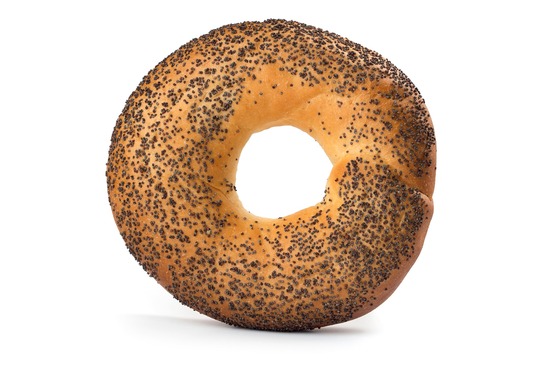
Bagel
Definition:
: a firm doughnut-shaped roll traditionally made by boiling and then baking
About the Word:
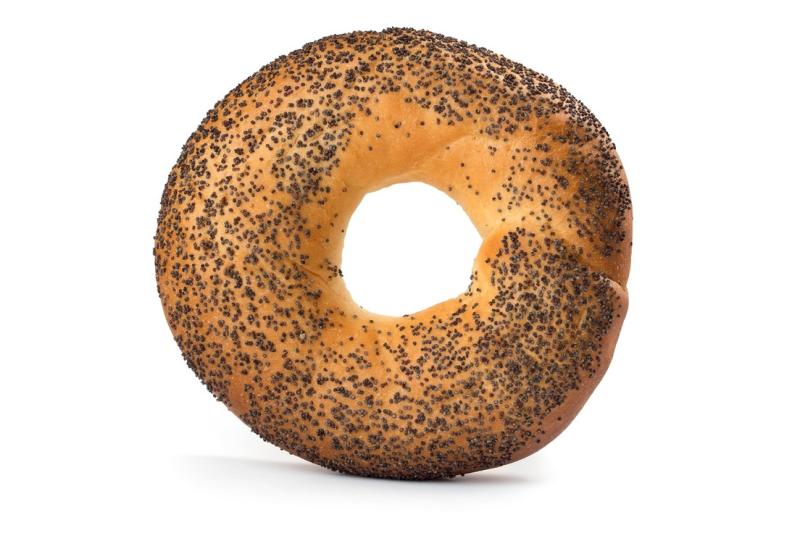
The bagel , both the humblest and mightiest of all bread forms, is, unsurprisingly, of Yiddish origins. The word that names it comes from that language's word beygl . It is widely speculated (at least by those who do such speculation) that the Yiddish word is descended from the Middle High German word böugel , which is from another German word for ring or bracelet.
Example:
"Among the most frequently heard complaints of New Yorkers who visit Israel is that 'you can't get a good bagel in Tel Aviv.'" - Ray Jones, Great American Stuff: A Celebration of People, Places, and Products that Make Us Happy to Live in America , 1997.
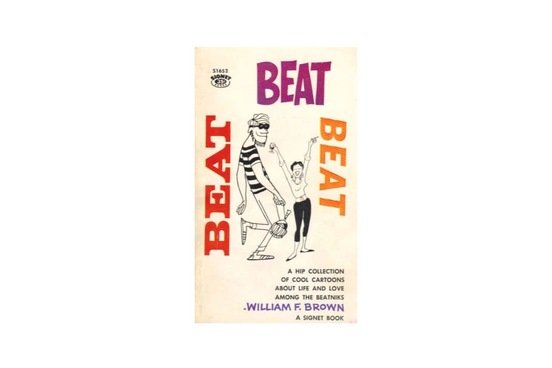
-nik
Definition:
: a person connected to an activity, an organization, a movement, etc.
About the Word:
There are many different kinds of -niks , a handy word ending which comes from the Yiddish suffix of the same spelling, and denotes a person who is connected to a group or a cause. Among the more common words that utilize this are beatnik , neatnik , peacenik , nudnick , and the ever popular no-goodnik . Russian also has this suffix, and English has borrowed -nik words from Russian too, including refusenik and Raskolnik (a dissenter from the Russian Orthodox Church).
Example:
"You're always so persistent about things. You're such a nudnik. Why do you ask me to eat shrimp? What the hell is so big about shrimp?" - Thomas J. Cottle, When the Music Stopped: Discovering My Mother , 2004
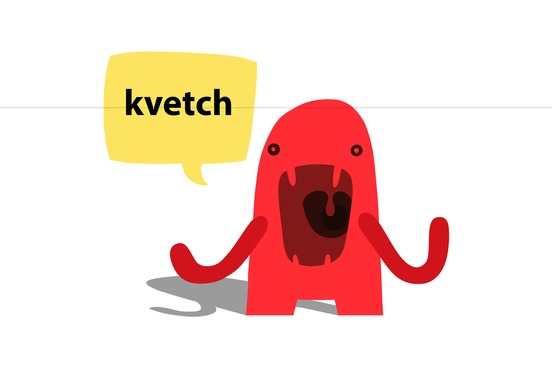
Kvetch
Definition:
: to complain often or constantly
About the Word:
If you look up kvetch in a Merriam-Webster dictionary online (either the Collegiate at m-w.com or the Unabridged at unabridged.merriam-webster.com) you will see, below the definition, a long and splendid list of synonyms. Our language has more than three dozen very similar ways of describing the act of complaining about something. Most of these have been in English for far longer than kvetch (which dates to around 1952 and comes from kvetshn , meaning to squeeze or pinch), so why do we need another? The fact that it begins with a kv is reason enough to want to add it to our language, but in addition to that there is no such thing as too many words for complaining.
Example:
"But even then she kvetched so much (he could still hear her; vampires have very good hearing), he finally gave up and shipped the two of them home." - Darrell Schweitzer & Martin Harry Greenberg, Full Moon City , 2010


Definition:
of a woman : slightly fat in an attractive way: having a full, rounded figure
About the Word:
Zaftig has been in use in English since the 1920s; a couple of the earliest known uses are found in Variety magazine, in reviews of burlesque dancers. It comes from the Yiddish word zaftik , meaning 'juicy or succulent.' If this word is new to you and you would like to take it out for a spin, please be advised that even though most dictionaries define it as connoting attractiveness people to whom it might apply are likely to not appreciate its use.
Example:
"Fannie Mae was a zaftig and handsome young woman. Will was a bachelor." - W. Cothran Campbell, Memoirs of a Longshot , 2007

Futz
Definition:
: fool around
About the Word:
Futz is a word that has the sort of etymology that will make small children think that studying language is an enjoyable pursuit. It is thought to have come (no one is entirely certain) from a modification of the Yiddish phrase arumfartsn zikh , the literal translation of which is 'to fart around.'
Example:
"But, as he got closer, I noticed he looked pretty sober, like there was more on his mind than just futzing around shooting the bull and getting in everybody’s way." - Ken Kesey, Sometimes a Great Notion , 1964
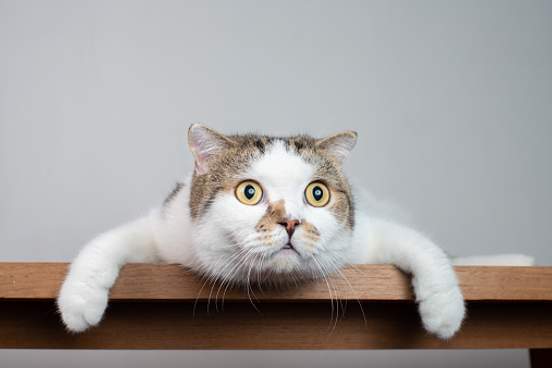
Kibitzer
Definition:
: one who looks on and often offers unwanted advice or comment
About the Word:
Kibitzer , which can also be spelled kibbitzer , may also be used in a broad sense, with the meaning "one who offers opinions." The word came to English from the Yiddish kibitser , which itself comes from the German word kiebitzen, meaning "to look on (at cards)."
Example:
"For onlookers like ours, a portrait is an event requiring the courage to decide which of us to choose, and a certain daring even to submit to a 20-minute sitting, surrounded by all the public kibbitzers who comment on the process, whether this person's nose is really wider than iť s been shown, or taking note of a wattle that's been brushed away."
— Cynthia Ozick, The American Scholar (Washington, DC), Autumn 2019

Schnorrer
Definition:
: a beggar; especially, one who wheedles others into supplying his or her wants
About the Word:
The comedian Jerry Seinfeld, unburdened by lexicographic rules, defined schnorrer as “someone who picks the cashews out of the mixed nuts.” We generally avoid using food-based analogies in our definitions, and so have adopted the wording seen above. Schnorrer comes to English from the Yiddish word shnoren (meaning "to beg").
Example:
"He was a notorious parasite and schnorrer, but few of his hosts were overtly unwelcoming, since he could be ingeniously vindictive in print, even when seeming to offer praise."
— Thomas Disch, The Hudson Review (New York, NY), Summer 2001

Schlemiel & Schlimazel
Definition:
: an unlucky bungler (schlemiel) & a consistently unlucky person (schlimazel)
About the Words:
The definitions we provide for schlemiel and schlimazel are quite similar; both refer to an individual who is deficient in luck. The schlemiel however, tends to have an air of incompetence surrounding their misfortune, whereas the schlimazel is simply unfortunate.
Example:
"The two displaced bums are having a friendly discussion about what exactly a Schlemiel is, a name they often call each other. Displaced Bum One gives this definition: A Schlemiel is someone who breaks his thumb in his vest pocket. That's not a Schlemiel, exclaims D. B. Two, that's a Schlimazel! A Schlemiel, he goes on to explain, is someone who falls on his back and breaks his nose."
— Raymond Federman & George Chambers, Triquarterly (Evanston, IL), Fall 1995
Tags
Who is online
77 visitors
Going to add to the list:
Meshuggeh
Crazy, foolish, idiotic, or senseless. From Yiddish meshuge. Spelled in a variety of ways in English, including "meshugge," "meshugah," or "meshuggah."
Oy vey
Oy vey is a Yiddish phrase expressing dismay or exasperation. Also spelled oy vay, oy veh, or oi vey, and often abbreviated to oy, the expression may be translated as "oh, woe!"
Gornisht
Gornisht comes from the German expression “gar nichts”, which means “nothing at all”. Similar to bubkes.
Mechayeh
A pleasure; a joy. Mechaieh is invariably uttered with a smile, a grin, a patting of the stomach.
Anyone got more?
Interesting article, but I have to say as a non-Jewish American, I have never heard of the words gornisht or mechayeh or goniff or zaftig or schnorrner.
You've been deprived. LOL
Shlep To drag, pull or lug something. Used as in "I had to shlep all the way over here from Brooklyn." Or, when you bring too much luggage on a trip you are shlepping along tons of extra baggage. Probably one of the most frequently used Yiddish words in English.
Shlepper Someone who does the shlepping. Sometimes refers to a person who is awkward, clumsy, disorganized or ineffectual.
Goniff A thief, swindler or cheat
Schmuck A jerk, an obnxious, detestable, contemptible person. The literal meaning is a pejorative for a penis.
Putz See Schmuck
Shtup To have sex. Used like in "Quit shtupping around" or "They had a quick shtup before her husband came home"... Literally, to stuff or to push or shove into...
Bubbeleh Derived from the Yiddish word for grandmother "buba" or "bubbie". A term of endearment.
Shtick Literally "a piece". A person's specialty or bit; a comic routine, style of performance. For example, giving audiences is the Pope's shtick.
Excellent additions to the list.
And as for the language itself..
YIDDISH
a language used by Jewish people in central and eastern Europe before The Holocaust. It was originally a German dialect with words from Hebrew and several modern languages and is today spoken mainly in the US, Israel, and Russia.
A few more -
Alteh Kocker A.K. for short. An old poop, a fuddyduddy. An old guy who drives around in his Cadillac wearing a hat and glasses.
Yenteh A gossip, a busybody. Like when a third cousin asks you at a bar mitzvah so what's your salary and why aren't you giving money for Uncle Morris in the old peoples' home in Milwaukee?
Verklempt Overcome with emotion or choked up. According to Merriam-Webster, verklempt is one of the most commonly used Yiddish words in English.
Vershtoonkeneh Stinking. The best example I ever heard was driving to work one day, and the DJ on the radio, who was not Jewish, was giving the traffic report... "there is an accident on the 10 near Centinela... the 405 is slow through the Sepulveda Pass... the 101, vershtoonkeneh."
goy
A non-Jew, a Gentile. As in Hebrew, one Gentile is a goy, many Gentiles are goyim, the non-Jewish world in general is “the goyim.” Goyish is the adjective form. Putting mayonnaise on a pastrami sandwich is goyish. Putting mayonnaise on a pastrami sandwich on white bread is even more goyish.
feh!
An expression of disgust or disapproval, representative of the sound of spitting.
kosher
Something that’s acceptable to Orthodox Jews, especially food. Other Jews may also “eat kosher” on some level but are not required to. Food that Orthodox Jews don’t eat – pork, shellfish, etc. – is called traif.In English, when you hear something that seems suspicious or shady, you might say, “That doesn’t sound kosher.”
Mazel Tov
Or mazltof. Literally “good luck,” (well, literally, “good constellation”) but it’s a congratulation for what just happened, not a hopeful wish for what might happen in the future. When someone gets married or has a child or graduates from college, this is what you say to them. It can also be used sarcastically to mean “it’s about time,” as in “It’s about time you finished school and stopped sponging off your parents.”
mentsh
An honorable, decent person, an authentic person, a person who helps you when you need help. Can be a man, woman or child.
mishpocheh
Or mishpokhe or mishpucha. It means “family,” as in “Relax, you’re mishpocheh. I’ll sell it to you at wholesale.”
nosh
Or nash. To nibble; a light snack, but you won’t be light if you don’t stop noshing.
nu
A general word that calls for a reply. It can mean, “So?” “Huh?” “Well?” “What’s up?” or “Hello?”
shalom
It means “deep peace,” and isn’t that a more meaningful greeting than “Hi, how are you ?” It can also mean goodbye.
shmooze
Chat, make small talk, converse about nothing in particular. But at Hollywood parties, guests often schmooze with people they want to impress.
spiel
A long, involved sales pitch, as in, “I had to listen to his whole spiel before I found out what he really wanted.” From the German word forplay.
shikse
A non-Jewish woman, all too often used derogatorily. It has the connotation of “young and beautiful,” so referring to a man’s Gentile wife or girlfriend as a shiksa implies that his primary attraction was her good looks. She is possibly blonde.
tchatchke
Or tshatshke. Knick-knack, little toy, collectible or giftware. It also appears in sentences such as, “My brother divorced his wife for some little tchatchke.” You can figure that one out.
tsuris
Or tsores. Serious troubles, not minor annoyances. Plagues of lice, gnats, flies, locusts, hail, death… now, those were tsuris.
tuches
Rear end, bottom, backside, buttocks. In proper Yiddish, it’s spelledtuchis or tuches or tokhis, and was the origin of the American slang word tush.
yente
Female busybody or gossip. At one time, high-class parents gave this name to their girls (after all, it has the same root as “gentle”), but it gained the Yiddish meaning of “she-devil”. The matchmaker in “Fiddler on the Roof” was named Yente (and she certainly was a yente though maybe not very high-class), so many people mistakenly think that yentemeans matchmaker.
yiddisher kop
Smart person. Literally means “Jewish head.” I don’t want to know what goyisher kop means.
And there are many more. Keep it up, gg, and we'll have the NT members speaking Yiddish in no time.
My favorite word: (borrowed from Yiddish)
Lantzman:
lantzman - Wiktionary, the free dictionary
Lantzman now normally refers to a fellow Jew. To find out if a person you never met before is a Jew, you would ask him "Du bist a yid?" (Are you Jewish?)