
Muslim Refugees Are Fleeing Arizona Fast Once They Found Out What Was Happening


Muslim Refugees Are Fleeing Arizona Fast Once They Found Out What Was Happening
American News, May 9 2017
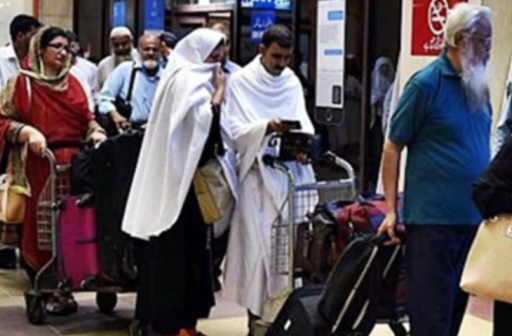
Over the past few years, the state of Arizona has been forced to resettle a great number of refugees. Now, millions of these migrants are leaving the state because of changes in public assistance programs.
According to Mad World News, at least half of the 7,351 Somalian migrants that have been resettled in Arizona have already left because there were not enough welfare and government benefits for them. Many of them were also turned off by the requirement to learn English and find jobs in order to obtain food stamps.
Like all refugees in the United States, those who resettled in Arizona received a lump payment of $925 from the U.S. Department of Health and Human Services. There seems to be an entitled expectation that the state will then pick up the rest of their bills, but Arizona has pushed back on that. Instead, the state refuses to offer any additional benefits unless refugees show that they are taking steps to earn income.
In order to obtain welfare, refugees are required to complete a monthly report proving they are taking English classes and actively searching for jobs. If they fail to meet those two basic requirements, their food stamps are cut off.
Apparently, the thought of working is too much to bear. They find it more appealing to leave Arizona all together and head toward more liberal states.
Tags
Who is online
111 visitors
This article does seem to be a little biased and exaggerated, especially when it talks of "millions" and can only say "half of the 7,351".
Another clue would be that there are only 3.3 million muslims in the US, including American converts.
LOL!!!
The only question I have is whether it is true that refugees are leaving due to a dearth of welfare benefits.
Somali Refugees Are Leaving Arizona in Large Numbers; Here's Why
Phoenix New Times
This seems to be a legitimate article very similar to your article and a little more detailed.
The numbers are questionable.
Having read your more detailed and less negatively biased article, I can understand why they would want to go to Minnesota in order to be in a larger and more established Somali community.
Per Arizona Department of Economic Security the total number of refugees resettled in Arizona in 2015 was 4,138. The 2016 estimate is projected to be slightly higher.
Were are these millions of refugees?
Here is information from someone that actually has experience with the Somali refugees.
One city's refugee success story
Since 2007, I’ve been writing about the mill town of Lewiston, Maine, and the more than 5,000 Somali refugees who have made it their home. The news in Lewiston is mostly good. The magazine and newspaper pieces I’ve written are stories of adaptation and progress because that’s what I see happening in this former mill town.
Message to the political leaders across the nation who don’t want refugees in their states: If Lewiston can do it, then so can other U.S. cities and towns.
In Lewiston there are Somali city leaders and police force recruits. One in four schoolchildren is of African descent, and Somali kids are heading off to college in ever-rising numbers. Downtown stores that had been closed for years have reopened under Somali proprietorship. Somalis work in industry, financial services and healthcare. They sell vegetables at farmers’ markets, and the triple-deckers that fan out from Kennedy Park once again are filled with families.
Not long ago I spent time at a Lewiston youth center that primarily serves Somali kids. At the center, girls raced down the hallway, their hijabs flying, to get first dibs on supplies in the art room. High schoolers sandwiched into a music studio sang Beyonce and Stevie Wonder to the accompaniment of a self-taught pianist, while outdoors bystanders cheered and a dog barked as goals accrued in a pick-up soccer game. Soccer is big in Lewiston. On Nov. 7, the high school boys team, with mostly Somali players, won the state championship.
The Somalis are finding their way alongside Lewistonians who’ve lived there for decades or generations. It’s not utopia. Unemployment remains high, and even after a decade many refugees still speak limited English. PTSD and other effects of trauma hinder acculturation. But there’s vibrancy to the place, especially to downtown, that didn’t exist a decade ago— and very little conflict.
I grew up an hour from Lewiston and, as a journalist, often wrote about western Maine. I had to work to sell the Lewiston Somali story to my editors because—in spite of occasional news briefs to the contrary—things in Lewiston were mostly going well. There were isolated racist and anti-Muslim incidents: the now-infamous pig’s head rolled through the doorway of a mosque, a poorly attended white supremacist rally, some graffiti. But overall, reception of the Somalis ranged from grudging acceptance to open-armed welcome.
What’s happened with the Somali refugees is likely what would happen with the Syrians, especially those relocated to smaller, former industrial cities with population drain—places in need of revitalization.
The first Somali refugees came north from Portland, where relocation housing was short, in February 2001. A handful of families soon became a hundred; at the height of the influx several dozen Somalis were showing up by Greyhound bus each week.
The climate grew strained. In 2002, then-mayor Laurier Raymond wrote: “The large number of new arrivals cannot continue without negative results for all… [W]e need breathing room.” Raymond’s letter triggered a chain of reactions, including the white supremacist rally and a sizeable counter-demonstration.
Relations steadily improved from there. When a man tossed that pig’s head into the mosque while people were praying, the reaction—at least publicly—was unanimous. The deed was denounced, the offender criminally charged.
New arrivals kept coming. Most recently there’s been an influx of asylum-seekers from Chad, Djibuti, and Congo. Month by month the neighborhoods and schools of the city are growing and adapting. Lewiston’s workforce is ever more diverse, and the overall economy is robust.
To be sure, there remains a divide between the newcomers and some longtime Lewistonians—cultural and religious differences that preclude anything but a civil intersection. But civility is a start.
Here's more. PA. factory turning to hiring refugees because American born workers fail drugs tests.
I have no doubt that so-call refuges, especially the Somalians, are interested mainly the FREE government hand outs they get more than the freedom and liberty coming here represents.
I find all of the immigrants I run into daily are trying to take advantage of the opportunities in this country, but I find most of the people they service to be exactly the opposite.