
Delta Airlines Employee Says Corporate Greed Is Behind Rise Of Anxiety, Rancor, And Disturbances Effecting Travelers And Airline Employees


Take It From Me, a Delta Employee: Passengers and Workers Are in This Fight Together
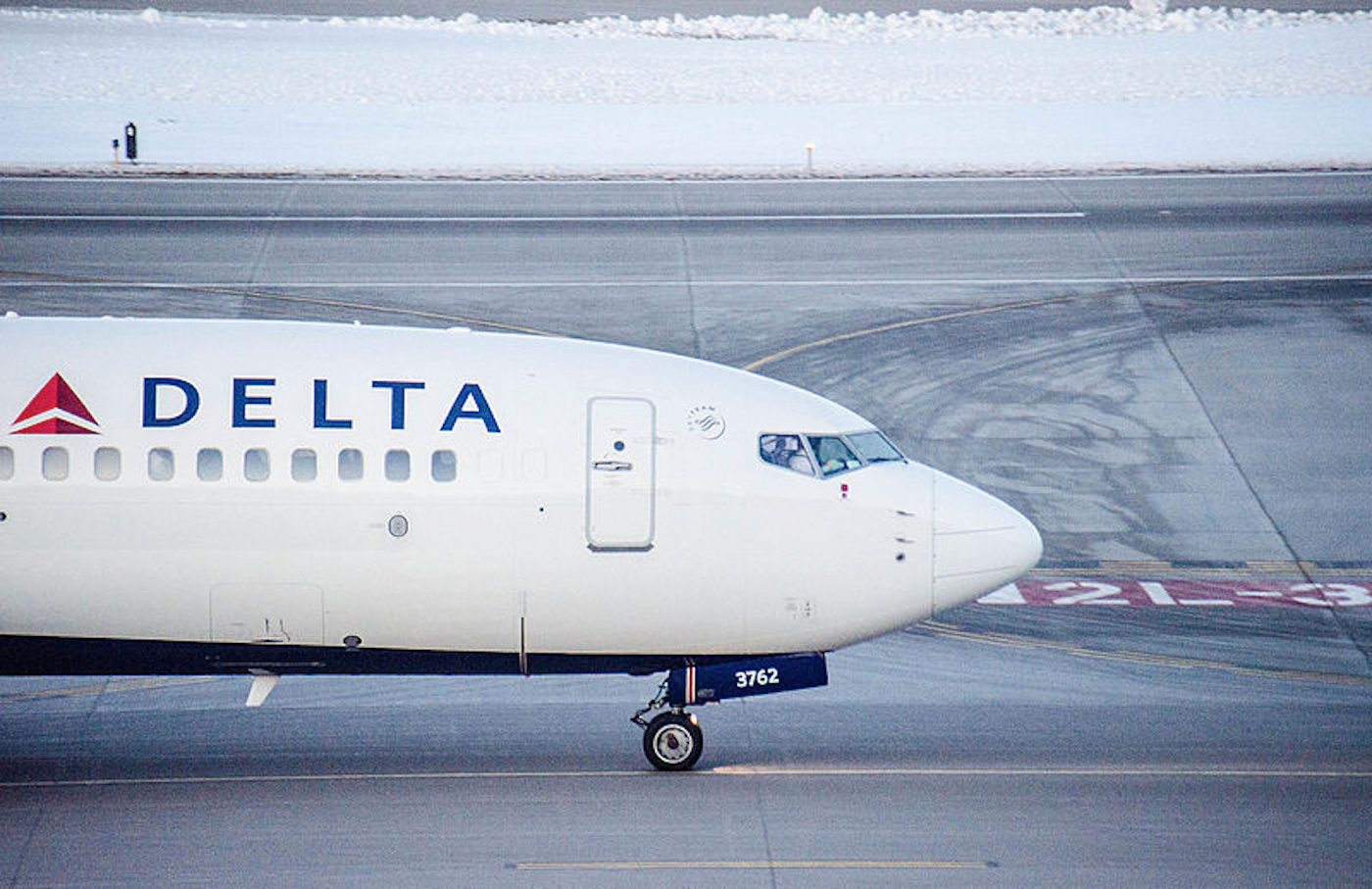
R ecent incidents of violence and disruption within the airline industry have called into question the policies that airlines utilize to transport people through the sky. Airlines charge excessive baggage fees , cram passengers into narrow seats, and consistently overbook aircraft, causing chaos when gate agents fail to generate enough offers from passengers to voluntarily take a later flight.
As a current Delta Air Lines employee, I feel it’s time to set the record straight about why these incidents of violence, distress, and anxiety have become increasingly prevalent in the last 25 years. I have no choice but to write this anonymously given Delta’s history of unfairly terminating its employees who speak out about their working conditions. I don’t want to become the next victim.
Don't blame the workers, but the incessant drive for profits coming from the very top of airline corporations.
People across the country have developed countless theories for who is at fault in these situations. Some have blamed airline employees for being too quick to call the police, who often unnecessarily escalate a situation to physical confrontation. Others blame passengers for these situations, claiming that because airlines possess the legal authority to demand passenger compliance, they also have the right to violently remove passengers, even those who do not put anyone’s life in danger.
The problem with both of these theories is that they place the blame on people without power: flight attendants, gate agents, and the passengers they transport. Instead of blaming those at the bottom, passengers need to recognize that these situations are the result of an incessant drive for airline profits coming from the very top of these corporations. That drive makes conditions for both airline workers and passengers worse.
For instance, take the fact that the biggest economy seats today are smaller than the smallest economy seats of the 1990s. The drive to make room for more seats has not only affected passenger comfort; it has also meant that galley-ways for flight attendants have shrunk significantly. Flight attendants at Delta are forced to work in incredibly small spaces, resulting in greater risk of injury for workers who sometimes spend up to 15 hours per day in these cramped conditions.
Ready to Fight Back? Sign Up For Take Action Now
Additionally, load factors (the percentage of passengers on board compared to the total number of seats) have increased dramatically. In 1995, the average load factor was 67 percent. By 2016 , that number had jumped to 83.4 percent, and it is continuing to rise as profitability compels airlines to overbook flights, causing passengers excessive stress and straining flight attendants.
Gate agents have also been strapped with increasing work-loads. Gate agents are given about an hour per domestic flight to make announcements, handle passenger questions, ticketing issues, re-booking, gate-check baggage, manage boarding, print flight departure paperwork, and close the aircraft door for an on-time departure. When flights are overbooked (sometimes by more than 25 seats), gate agents are forced to seek volunteers to take a later flight, in addition to the tasks they are already responsible for completing. Overbooked aircrafts create a toxic environment for passengers who fear their seats could be taken, as well as gate agents who are subject to disciplinary action if their flight doesn’t leave on time.
Increased load factors have also resulted in more bags for baggage handlers per plane, and the increase in baggage fees has resulted in tremendous profits for the airlines. In 2016, Delta made $866 million dollars from baggage fees alone . Still, Delta often staffs a team of only three ramp agents to handle domestic departures: the minimum standard set by the Federal Aviation Administration. Most of these profits go straight into the pockets of investors, rather than to ramp employees who do the work.
Instead of indicting each other, employees and passengers should focus on solidarity. Our interests are the same.
Rather than blaming these stressful situations on passengers, or airline employees forced to increase productivity and work under unsafe conditions, we must place the blame squarely on those at the top of the industry. The CEOs, boards of directors, and major shareholders of Delta Air Lines benefit from both their workers’ and passengers’ being forced to do more with less. Tighter physical space, lower wages, and fewer benefits mean higher profit margins for Delta, which is already the most profitable company in the US airline industry.
Instead of indicting each other (employees and passengers), we should focus on fostering solidarity. Many of our interests are the same.
Most obviously, a passenger’s flying conditions are also an airline employee’s working conditions. The more room there is for passengers, the easier it is for flight attendants to move freely (without injury) throughout the cabin. The less airlines overbook flights, the less stress gate agents will experience in getting a flight out on time, and the less likely passengers will be involuntarily removed from an aircraft. The more ramp agents assigned to each departure, the less likely that passengers lose their bags.
T he declining emphasis put on passenger comfort and airline employee working conditions can be traced back to a common cause: the deregulation of the US airline industry and the relentless pursuit of profit.
Since the 1980s there has been a vicious assault on both passenger comfort and airline employees’ living standards across the country. The origins of this assault can be traced to one of Ronald Reagan’s first actions as president: to crush the strike of the Air Traffic Controllers Union. Deregulation of the airline industry has decreased our ability to act collectively to maintain a decent life. This is felt most acutely by Delta employees, who remain the least unionized of the four major US carriers that have together monopolized the skies (the others are United, American, and Southwest).
By supporting our fight for a union, passengers can help us make the flying experience better for everyone.
Over the last 40 years our employment conditions have worsened. In the 1980s, the vast majority of our jobs were full time with excellent benefits. Today, our jobs continue to be replaced by cheaper, part time, non-benefit positions that Delta has appropriately named “Ready Reserve.” This has all been done in the name of increasing Delta’s profitability by introducing hyper-exploitable workers required to do the same work without equal compensation.
This campaign against Delta employees has been waged with little opposition, but it doesn’t have to remain unchallenged. We can fight back by organizing ourselves into a union that will give us a say in setting our working conditions, the wages we receive, and the benefits we deserve.
As long as we aren’t organized, Delta executives can change any of our conditions whenever they please. This was most clearly felt in February, when Delta announced record profits but cut our profit-sharing checks by more than half, from 21 percent to 10 percent. The only group to maintain their profit-sharing payout was the pilots, who leveraged their union representation to negotiate wage increases of 30 percent without a reduction in profit sharing.
https://www.thenation.com/article/take-delta-employee-passengers-workers-fight-together/
Tags
Who is online
97 visitors
As a current Delta Air Lines employee, I feel it’s time to set the record straight about why these incidents of violence, distress, and anxiety have become increasingly prevalent in the last 25 years. I have no choice but to write this anonymously given Delta’s history of unfairly terminating its employees who speak out about their working conditions. I don’t want to become the next victim.
Don't blame the workers, but the incessant drive for profits coming from the very top of airline corporations.
What some corporations are doing in regard to their employees is going to drive them to unionize. If you treat employees fairly the wish to join a union is quite diminished.
What some corporations are doing in regard to their employees is going to drive them to unionize. If you treat employees fairly the wish to join a union is quite diminished.
Grumman is proof of that. They kept the unions out by referring to employees as The Grumman Family", providing one of the first credit unions, and good benefits. It was a formula that got them through some tough times. After working for two union shops (Fairchild and Republic), my dad became a Grummanite and was thrilled not to have to deal with the unions. If you are fair with your employees, it will not only keep unions out, but keep employees loyal.
Why should any fair minded employer want to keep unions out? Unions are employees way of obtaining collective power and to equalize the unequal dynamic of an employer -individual employee relationship.
Unions that abuse their power and become corrupt are a problem, just as businesses that become corrupt are a problem, but unions are not a problem in general.
I am surprised to see you say that.
One of the worst things to ever happen to this country is the notion that profits must always increase. If a plane can only comfortably hold 150 passengers, they want to jiggle with it so it will hold 160, so there can be MORE profit, even if it makes the passengers dislike the experience. The profit they have comfortably made for years isn't good enough. The CEO's and managers won't get their big bonus unless there is MORE profit. A higher return than previously. If we can't increase the number of passengers then let's layoff some workers. If it leads to delays, we will stonewall until it effects the bottom line. Never do they say, we have a good profit, let's just maintain it, there always must be more, at any cost. This is not just in airlines, it is in many business across the board.
But it takes sensational events between the passengers and airline employees to get the corporate suits to change policy.
Here is another example
On the right side we see that "workforce adjustments" (layoffs) are likely because earnings are "flat". Not that there are no earnings, but that they are "flat". The profit rate is the same as it was last year, so let's layoff some people. What is objectively wrong with profit being the same as it was last year?
ONLY SLIGHTLY OFF TOPIC
Trump: "The auto industry is starting to come back in a very, very big way."
If corporate greed is the cause of worker unrest and passenger discomfort at Delta, I can't imagine how massive the corporate greed must be at United Airlines.
I fly 4 to 6 times per month. While the conditions are often frustrating, I haven't noticed any significant increase in frustration over the last five years. In fact, some of the newer planes are more comfortable.