
A Message From a C.E.O.: Tariffs Are Going to Hurt American Companies

 S E E D E D C O N T E N T

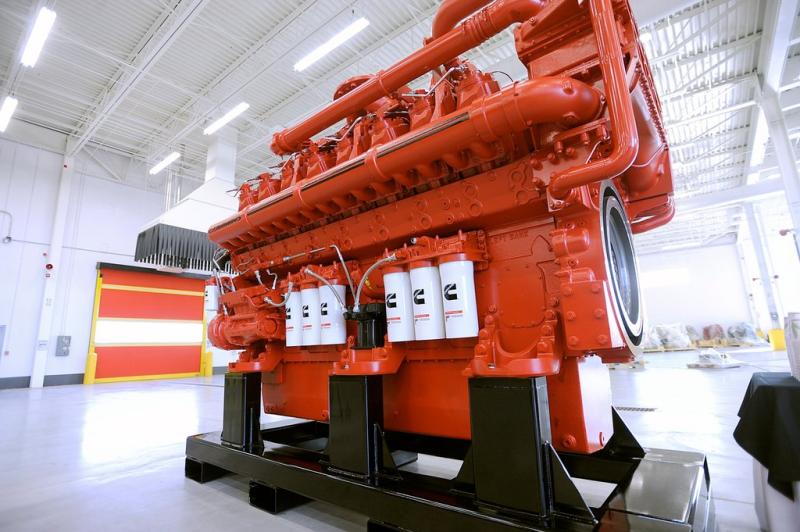
In 1976, Cummins began operations at our engine plant in Seymour, a small town of about 20,000 people in southern Indiana. The Seymour Engine Plant now produces engines for equipment like locomotives, large boats and power generators that back up critical infrastructure like data centers and landmarks like Wrigley Field. Nearly 80 percent of the products that Cummins makes in Seymour are exported; in other words, the existence of this plant is a direct result of our company’s ability to access global markets.
Cummins employs about 1,000 people in Seymour, and we have invested more than $300 million into the plant in the past seven years, including a technical center that employs hundreds of engineers. In the past year, we have added nearly 50 employees. While other small towns are struggling, Seymour is thriving.
However, increased supply-chain costs because of the recent tariffs will raise the price of the products from Seymour. We may also face retaliatory tariffs, which could result in lost sales and restrict or reverse our growth.
International trade has been the single most important contributor to growth and hiring at Cummins for nearly two decades. Half of our business is outside the United States, and more than 20 percent of the 25,000 Cummins jobs in America are directly tied to international business. And when we are growing, it often means our suppliers are also growing.
Our supply chain, which has been developed and optimized over decades, cannot be reorganized in short order. We rely on more than 2,500 American companies for components and materials, but for certain components — such as cylinder blocks, connecting rods and electronic controls — there are very few suppliers anywhere. Our products are specialized — we make engines for large tractor-trailer trucks, garbage trucks, trains, construction and mining equipment, among other things — and our markets are much smaller than the American auto market, so we sometimes look beyond our backyard for suppliers.
One model of engine, for example, was developed in the United States but is manufactured in China for the Chinese market. A small number of those engines — approximately 5,000 — are exported from our plant in China to the United States, so they are considered subject to tariffs under the administration’s recent actions.
So this product — developed by American engineers and sold by an American company — faces a 25 percent tariff here at home and must compete against products from European and other Asian engine manufacturers that are not subject to the tariffs. This will make it very difficult for Cummins to compete, putting our ability to sell these engines in the United States in peril.
Given its size and standing in the world, China should modernize its trading practices and improve intellectual property protection, among other issues, and improve access for American and other foreign companies. To make this possible, the United States and its allies need a long-term strategy to apply joint pressure over a sustained period. We should work openly and transparently with the Chinese government and American businesses. Unilateral and escalating tariffs are not the answer.
These tariffs put us in a worse position now than when we started these negotiations, and we are concerned there is no end in sight. Because of this uncertainty, companies like ours are standing still, unclear on how and where to invest. Even an imperfect trade deal — one that gets us a bit closer to a level playing field — is better than no trade deal, and no trade deal is better than implementing tariffs.
Businesses face a real dilemma. Can they absorb the tariffs? Or do they pass the increased costs to consumers?
We see no upside in the implementation of tariffs. They are a tax, and the risky proposition of entering a trade war could slow down the economy. Even putting up short-term barriers with trading partners in China and Europe can cause long-term losses in market share, resulting in lost jobs in the United States. The mere threat of tariffs results in significant costs for Cummins that cannot be recovered.
As the leader of Cummins, I am charged with providing opportunities for shareholders, customers, employees and our communities and working with policymakers to create a healthy climate for business. What’s at stake is not just the company’s profits, but jobs in Seymour and other communities where we work, such as Rocky Mount, N.C., and Jamestown, N.Y. This is what concerns me most. American workers and their families will be the real casualties of a trade war.
Tom Linebarger is the chairman and chief executive of Cummins.
Tags
Who is online



234 visitors
Interesting article.
Thoughts...
OK so the usual come back is that countries like China have been putting tariffs on our goods for a long time, so what's good for the goose is good for the gander. How do we combat China or is that too late?
No, it's not too late...IMO, you don't start a trade war on three fronts with your allies...A more surgical approach is required. If China is the target than use it on specific imports from them that will hurt, don't do a mass tariff on thousands of products which some of which are really going to hurt America companies.
The EU has the same problem with China that he U.S. does. It would be better to use them as a friend and both of us battle the Chinese...
On the first $39 billion of tariffs we've had to offer up a $12 billion dollar subsidy to farmers. In addition there are thousands of requests for relief piling up. Can you imagine what it's gong to be like if the 25% tariff goes into effect on $200 billion dollars worth of trade..
The CEO of Cummins has expressed some good ideas in his comments as well.
Obviously, a trade war that has us bailing out money to different industries is not winnable nor sustainable, especially since everyone talks about bringing down our national debt.
And I agree, that we should join the EU to battle China instead of fight the EU. Once China is under control (so to speak), then we can negotiate with the EU.
People are so focused on Russia, that they don't see China. China is the sleeping tiger. They have their fingers in every pie world wide, including the US. When dealing with them, you don't use a sledge hammer but a scalpel.
China has two things going for it now, their money which they are investing all over the world, Europe, Asia, Americas and their growing military power...
There is no point in hurting our own companies in trying to fight a war on so many fronts. Winning a battle is not winning the war and China's plan goes out decades and takes into consideration losing some battles along the way.
There is no way, IMO, that if this trade war goes into hundreds of billions of dollars of tariffs that we can make our companies that are going to be hurt, whole.
Several takeaways.
Most people don't see what this man sees. Not just his company and workers feeling a squeeze but the whole supply chain. It is more than one single company that feels an impact. And basically all the tax breaks that were given now seem to be offset.
When trump says that there needs to be pain in order to reap any reward, the pain can be substantial and flow down a whole chain.
I hate to say it but China is in a much better position than we are. We can be hurt a lot more by this than they will be. The attacking on all fronts puts us in a worse position. Us being divided from everyone greatly diminishes any bargaining power we may have had.
I've stated this many times, do not fight a war on three fronts and that is exactly what we are doing. Using the EU, Canada and Mexico as allies to get China to start changing some of their policies while not hurting American/EU/Canadian/Mexico business makes more sense to me than jumping in with both feet against the world.
It is as if these tariffs were launched in another place and time when we as a nation would have been much more autonomous regarding resources and products consumed, imported and exported.
It doesn't work that way these days.
Cummins is just one example. The automobile industry is more intertwined than this example. Recent production shifts to China could very well un-do those shifts once production resumes there in a year or so.
Conversely, planned new production State side will have a greater uphill battle as exports to China.
I wonder how many case studies/impact analysis studies were performed regarding the affected American industries now facing the fallout from multiple sides of the trade barriers?
Case in point, BMW just announced that their X5 model which was built in SC and exported to China will now be built and shipped to China from their plant in Thailand. The SC plant isn't going to get that back now that it's moved to Thailand.
From what I've seen thus far, doesn't seem that there were any done.
Earlier we talked about some Harley-Davidson production shifts. This was announced prior to some new product development that has recently been announced.
In the next few years H-D will begin introducing several new ranges of electrically motorized heavy bicycles and more youth and sports oriented motorcycles.
In fact some of these will be sold online and in shopping venues.
I wonder where they will be made?
H/D has a plant in India. Wouldn't surprise me to see them made there, or in China because of China's commitment to electric vehicles.
I saw a report that a bit over half the electric cars sold worldwide are sold in China.
Both options are possible.
Speaking of China and electric motorized vehicles, wasn't it China that won a contract to supply BMW with a billion dollar battery award recently?
I am still concerned China may steal the Goodenough-Barga battery technology.
I read something a while back about China and BMW in a joint venture with batteries...I'm really don't remember the jist of it though.
Found this article on it....
Here is what I was thinking about:
I hadn't seen this announcement, dave...Damn interesting to say the least.
I wonder how many tariffs those batteries will skirt by producing them in the heart of the EU?
Good question, probably quite a few.
Here is some recent information regarding the product planning at H-D. While reading this, can't help but wonder how much related work to produce these new offerings was pushed offshore.
Getting future product information or specific plans out of Harley-Davidson has, historically, been nearly impossible. The company has treated things like bringing back the Tombstone taillight as though it was a state secret, and new motorcycle product is typically poised on trucks and dropped at dealers as soon as those models are announced.
So the fact that Harley-Davidson is going on record about its plans over the next five years in great detail is a shocking change in corporate stance.
But not nearly as shocking as the product it has chosen to show, and the information behind its plans to change how the company will interface with retail customers and how aggressively it will be pursuing growth in India, China, and other overseas markets.
Harley-Davidson is going big in the electric-vehicle space with a variety of products that will range from motorcycles to pedal-assist bicycles.
Courtesy of Harley-Davidson
“We have typically been very conservative,” Senior Vice President and Chief Operating Officer Michelle Kumbier said. “This is very different for us to kind of just blow the doors off and tell you everything that we’re going to be doing over the next five years. It’s just not what we have done, but we are so excited about the direction that we’re going and all the different things that we’re doing that we wanted to get this out into the marketplace right away.”
It’s also a means of reassuring the world and shareholders that this $4.5 billion company is taking action to counter declining sales in its traditional touring and custom segments, and that it recognizes the changing world of transportation and importance of meeting customers wherever they are in the world on their terms, whether that’s an electric-assist bicycle in Belgium or a new Road Glide customer in China. Or a longtime customer in Duluth.
We’re here, of course, for the motorcycles. The new internal-combustion machines shown here are the harbingers of 16 new middleweight models using two all-new engines, one that will be 500 and 750cc and the other that will be 975 and 1,250cc, all liquid-cooled, 60-degree V-twins with DOHC. These will power adventure-tourers, customs, and streetfighters and put Harley-Davidson in segments it’s never directly competed in before.
The Motor Company was careful to point out it will continue to develop and evolve existing touring and cruiser models for its traditional customer base as it pushes aggressively into new areas on its mission to develop 2 million new riders in the U.S. by 2027 and increase its international business to 50 percent of annual volume. The company calls this overarching initiative “more roads to Harley-Davidson.”
The Pan America is slated as a 2020 model and will be powered by either a 975 or 1,250cc modular engine platform.
Courtesy of Harley-Davidson
2020 Harley-Davidson Pan America Adventure-Tourer
Harley-Davidson will produce a full-on adventure bike called the Pan America for 2020. It’s shown jumping in the video and doing things we expect a liter-class adventure motorcycle to do. Engine displacement will be 1,250cc using what Harley-Davidson describes as a modular middleweight engine platform.
“It’s rugged, it’s capable, and I think what’s important is we did it our way,” Kumbier said. “There are a lot of different adventure-touring products out there but certainly our style and our approach is truly Harley-Davidson.”
Aside from saying the bike will have “a lot of advanced technology,” specs are essentially nonexistent as the motorcycle shown is a prototype, just as all the other products shown are.
The new engine appears to be a 60-degree vee and dual-overhead cam and it’s highly unlikely that it will be anything but a six-speed gearbox.
Images reveal the Pan America is aimed at a pretty high spec with radial-mount brakes, tubeless spoke wheels running Michelin Anakee Wild tires, a stout inverted fork and single shock. Windscreen height is clearly adjustable, judging by the “tracks” the center section rides on.
It is interesting to note that in the video the first dirt-riding images shown at 1:17 appear to be the Sportster off-roaders built by neo-custom iconoclasts El Solitario for its Desert Wolves adventure in the Sahara and are therefore air-cooled and not Pan Americas as described in the press release.
2020 will see a liquid-cooled 975cc Streetfighter model from Harley-Davidson.
Courtesy of Harley-Davidson
2020 Harley-Davidson Streetfighter
There will be nine streetfighter models using the new engines and taking Harley-Davidson into a new, highly competitive, and lower-sales-volume segment of the market. While these models, ranging from 500 to 1,250cc, certainly will generate interest in the US market, naked roadsters—like the Pan America—will compete strongly in Europe. The first streetfighter will use the 975cc variation of the liquid-cooled V-twin.
Kumbier said there would be unfaired and partly faired models. In the video a street-tracker clay model is shown being worked on with an early XR750 in the background, while a compact half-faired clay model is framed with, and reminiscent of, the 1994 Harley-Davidson VR1000 roadracer homologation special. It’s a promising direction for sport-oriented riders who may not have looked to the Bar and Shield before. Like with the adventure bike, competitive execution and performance will be key to success.
I asked if the volume in the adventure and streetfighter segments were smaller and perhaps an acknowledgement that growth for Harley-Davidson would come in smaller chunks of smaller segments. “We’ve got a tremendous distribution channel that doesn’t necessarily exist for others that may be in this space,” Kumbier said. “So we think coming into the United States that there is growth opportunity. We don’t view it as necessarily small volume and we think that we can be a big player in this. And then of course globally you look at adventure-touring; there’s a tremendous market especially in Europe, as well as for streetfighters.”
The unnamed 1,250cc Custom will be powered by the same engine platform found in the Pan America and Streetfighter and will be a 2020 model.
Courtesy of Harley-Davidson
2020 Custom
The custom based on the modular engine platform is the most traditional offering of the models shown. It takes its cues from the visual playbook of “American” motorcycle with a “baby Fat Bob” treatment down to the chunky wheels/tires and rectangular headlight. The 1,250cc model shown was unnamed and said to be on the way in 2020. It is the first of five bikes in this range.
The silence was deafening in all of this as the word “Sportster” wasn’t part of the discussion. The likelihood that these new liquid-cooled middleweight twins are replacements for the Sportster line is low, so expect news in Harley-Davidson’s more traditional custom space. There is also the “adventure Sportster” shown in the video that suggests continued life for the air-cooled platform. “I wouldn’t jump to a conclusion that this product is necessarily a replacement for Sportster,” Kumbier said.
A premium and high-power halo model—the 2019 Harley-Davidson LiveWire is the EV first model to hit dealer floors.
Courtesy of Harley-Davidson
2019 Harley-Davidson LiveWire, Other Light Electrics, and an Electric-Assist Bicycle “We're going big in EV with a family of products that will range in size, power, as well as price,” Kumbier started off her discussion of the electrification of Harley-Davidson. “We just talked about the modular middleweight platform, and certainly adventure-touring and streetfighters are going to bring in new customers, but when you look at EV you know this is a whole new customer base that we are bringing in.”
The 2019 LiveWire is the “premium, high-power, halo model” of the H-D electric line and will be delivered in 2019. It brings the company’s high-level aesthetic and finish expertise to a segment historically lacking the design chops and budget to pull off a truly finished package. The 2014 LiveWire prototypes proved to be dynamically competent and fun to ride. Battery density has improved and cost has gone down since that time, so expectations are high for the 2019 production LiveWire.
“Our focus is around urbanization and really unlocking those urban marketplaces,” Kumbier said. “And, as we know, EV is easy to ride—it’s twist and go and it’s just kind of a visceral riding experience. We’re really excited about leaning into this space pretty heavily. We think there’s a tremendous amount of potential here.”
So much potential that Harley-Davidson’s push into electric vehicles is taking a much broader expression than just the LiveWire. The compact electric street-tracker is reminiscent of the Alta Motor Redshift ST concept and a compelling visual argument that compact electrics can and will be exceptionally cool. Kumbier described the two models, to be introduced in 2021 and 2022, as more “middleweight, if you will” as compared to the LiveWire, with “accessible power” and a lower price. Harley-Davidson announced in March 2018 that it made an equity investment in Alta, the San Franciso-based electric-motorcycle startup ( read a tech piece on one of its models here ).
The “lightweight urban” category showed three models to be introduced in the same 2021–’22 time frame: a pedal-less electric mountain bike-like vehicle, a utility scooter, and an electric-assist bicycle. “Launch with impact to inspire new riders ahead of product availability to seed demand,” said the provided material.
The electric-assist pedal bicycle has the potential to be the volume leader if it is mass marketed around the world, as this segment of transportation is growing rapidly. Many markets don’t require licensing or insurance for pedal-assist bikes, making the barrier to entry very low.
Small-Displacement Motorcycles In Asian Markets
The Indian motorcycle market is something on the order of 20 million new units sold per year, mostly under 200cc and primarily for utility. Prices are necessarily low and margins are tight, but the growing middle class in the country of 1.3 billion people has increased demand for more premium motorcycles and potential sales volume is huge.
Harley-Davidson plans to enter India through a strategic alliance in Asia within the next two years with 250–500cc meant to be low-cost but aspirational and a bridge to the company’s larger motorcycles. The strategy is similar in China, though the emphasis there appeared to be tipped toward existing product. “We know that we have a tremendous opportunity to grow our business in China to grow volume and market share,” Kumbier said. “We’re going to invest much more heavily there. We’re going to leverage our expanded portfolio, we’re going to leverage our Thailand facility because we’re able to get around most of the duties by assembling out of Thailand and shipping the product into China. Therefore we can lower our prices and more people will have access to the product because it’s more affordable. We’re going to establish a China distribution center, we’re going expand our dealer network there as well as improve performance of the dealer network and increase our marketing investment.”
I like the Streetfighter.
It looks interesting. I would like to know more about the architecture of these new gen modular 60* V twins.
Seems that the international market is going to be as large as the domestic if HD is right. Some interesting bikes they are developing.
I read somewhere where Indian has a factory in India and possible will be building some bikes in Europe as well.
We live in some pretty interesting times. Two countries, India and China have a combined population of 2.7 billion people. You can see why both companies are looking there for growth.
Agreed, that's a pretty cool looking bike.
Speaking of electric and batteries here is some news that was just announced this morning.
Nissan will be selling it's battery operation to China's Envision group...They have plants in, drum roll please...Tennessee and the UK..
In the famous words of Jen Davies; "Well then".
There they are overtaking more trade and tariff barriers. We just hamstrung our industries who have worked for years to get inside of China's trade barriers.
In reality, the current approach to EV has some downsides of it's own.
Just look at Li technology. Many advantages over Lead Acid technology, yet, still not a sustainable technology. Last time I checked it is still more cost effective to mine new lithium instead of recycling spent Li batteries.
Also, mining lithium requires some ecologically destructive mining techniques.
In the end, Li has performance issues. For practical daily use, greater power density is needed, overheating and combustion are issues, charge rates and charge cycles are issues and discharge rates are performance limiting issues.
I like that technology where sand and sodium are the 2 "rare earths" needed which happens to have 3 1/2 times the power density, will not catch fire, at least 2 1/2 times the discharge rate capability, charges in minutes without "supercharging", and as far as I know recharge cycles are multiple times beyond Li and limits have yet to be reached in testing.
Then speaking of rare earths materials for permanent magnets do not grow on trees. Switching to EV has it own ecological implications in this area as well.
Then there is infrastructure. I would be surprised if any nation currently has the electrical grid and capacity in place for such a switch over. Worse yet, I would be just as surprised if any nation has a plan in place to meet the demand of an EV powered transportation system.
There are plenty partially thought out ideas out there, but that is about it as I as I am aware.
Maybe a little off topic from the original story, but these things are all intertwined.
Oh they sure are intertwined. And most rare earth metals come from, yup, China.
Funny thing about that.
Didn't China also get first dibs on the rare earths in Afghanistan? I think they were making moves in South America at one time for lithium and minerals. ? Do you know anything about that?
I know that China reached an agreement with Afghanistan re mining and I think it was for rare earth metals...I don't know anything about South America.
I can not recall the country in negotiations with them.
In look just at this discussion and a few others recently, it seems some less than advantageous decisions were made regarding these tariffs.
Kav I hope you do not mind this Tariff exempted Vid from NASA!
https://youtu.be/bKk_7NIKY3Y