
Inside the Daring Life of a Forgotten Female War Photographer

 S E E D E D C O N T E N T

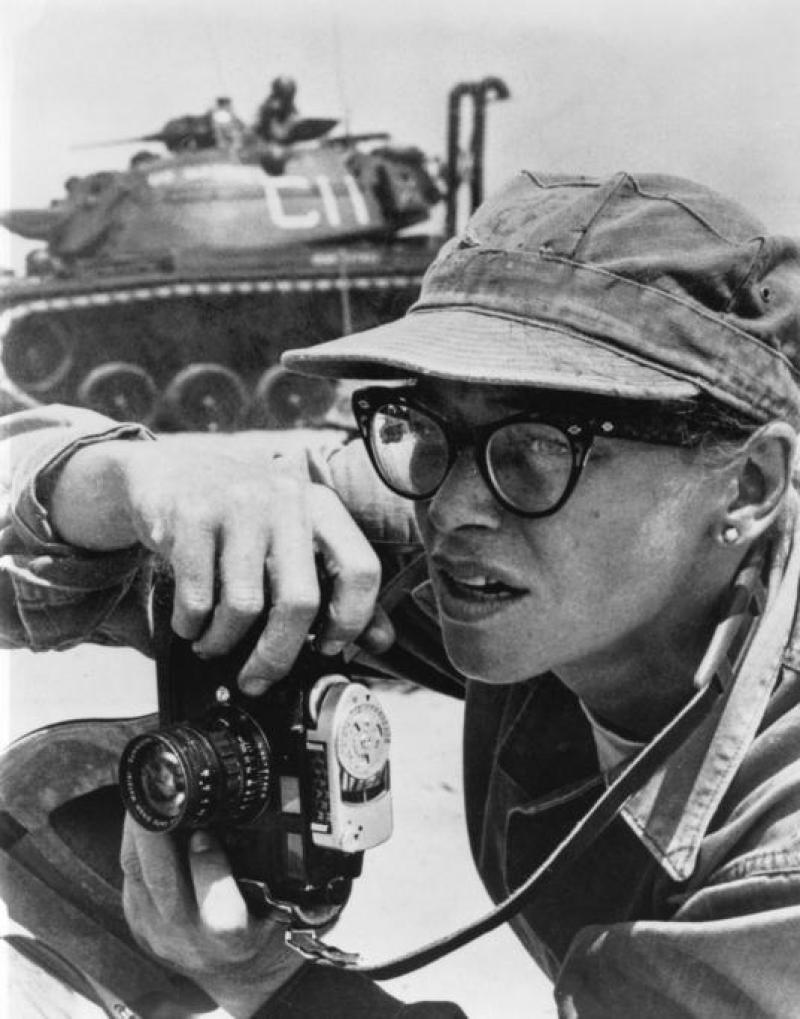
THE 36 HOURS before Dickey Chapelle leaped off a tower with the Screaming Eagles were terrifying. She was 41 years old and parachute jumping for the first time. But fear never lasted for the pioneering war correspondent, and she quickly proclaimed it among “the greatest experiences one can have.”
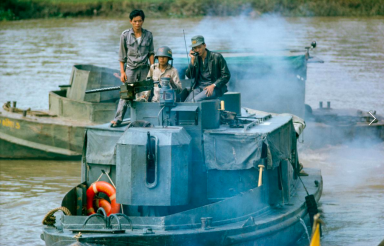
With dozens of operations under her belt, Dickey Chapelle was one of the most experienced correspondents covering Vietnam. In a story for National Geographic , she photographed how the war was fought on the water. Here, South Vietnamese soldiers man a gunboat on the Mekong Delta.
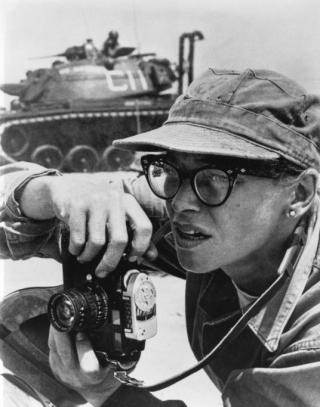
… PHOTOGRAPH BY LEW LOWERY, U.S. MARINE CORPS/AP
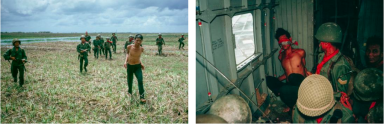
A Vietcong prisoner found with Communist propaganda walks in front of his captors.
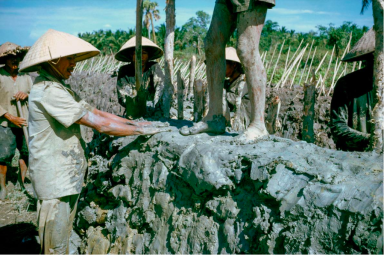
Vietcong prisoners build defensive mud walls around a village in South Vietnam.
PHOTOGRAPH BY DICKEY CHAPELLE, NATIONAL GEOGRAPHIC CREATIVEStill, she couldn’t shake the taste for foreign reporting. She and Tony began photographing the after-effects of war and traveled to nearly two dozen countries as volunteer photographers for relief agencies and the State Department. Each time Chapelle began to settle down, she was called back by war. She became a publicist for an airline and a research institute but couldn’t resist covering the Hungarian revolution, where she was held prisoner for a month. After Tony collected funds for her release, she began to hop from conflict to conflict, seemingly undeterred by danger.
A LIFE OF WAR
Chapelle once wrote that the story she reported again and again was of “men brave enough to risk their lives in the defense of freedom against tyranny,” and this frontline perspective made her a legend at a time when there were few female journalists in newsrooms and fewer on battlefields. She was used to being a novelty in the offices of generals and within Marine units. Sometimes being underestimated worked to her favor: She sold a book on military training to her editor by performing the entire Army fitness test in his offi
But Chapelle’s sex didn’t grant her any special treatment as a journalist. “Not once has a general ever offered to trade me a SECRET operations order for my fair white virtue, and if it sounds as if I’m complaining, I guess in a sense I sure am,” she wrote to her publisher while writing her autobiography, first titled The Trouble I’ve Asked for and later published as What’s a Woman Doing Here? , after the refrain she commonly heard on the battlefield .
The Chapelles began doing stories for National Geographic magazine in the 1950s, but Tony suffered two heart attacks during their 15 years of marriage, and, as he later explained to his editor, sought a more sedentary life. When they worked together, Dickey had done the writing and Tony had taken the photographs. After they separated, Dickey took on both roles in Vietnam.
In May 1962, Chapelle celebrated her 20th anniversary as a war correspondent by embedding with the helicopter units waging an aerial battle over Vietnam . One evening, three separate Marines approached her to say that she’d photographed or interviewed their fathers in Iwo Jima and Okinawa two decades earlier. “With a shock,” she wrote, “I realized I was now covering my second generation of combat Marines—covering them, again, on embattled ground half a world away from home.”
That year, Dickey became the second woman awarded the George Polk Memorial Award, the highest award for bravery from the Overseas Press Club of America. She’d seen more fighting in Vietnam than any other American—17 operations in all, the press release boasted, noting: “The importance of the pictures she took in Vietnam lies in the fact that they were made where nobody goes—BEYOND the telegraph lines and jeepible roads.”
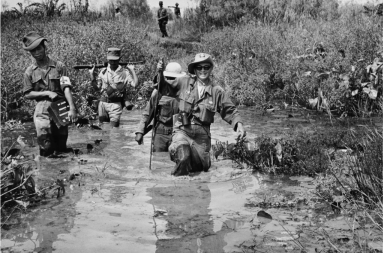
Chapelle wades through mud on patrol with the Sea Swallows, a militia of Chinese refugees who sided with the Vietnamese government. When she died, there were no other female photographers covering the divisive and dangerous war in Vietnam.
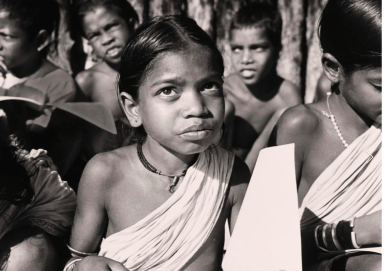
Dickey and Tony Chapelle traveled the world documenting efforts by relief agencies to alleviate suffering. In India, they photographed a community development project to improve life for villagers, including this first-grader learning the Hindi alphabet.
VIETNAM’S FINALE
The war in Vietnam had split American public sentiment, and each dispatch from Chapelle prompted a flood of emotional feedback to National Geographic' headquarters in Washington, D.C.. “From Geographic I expect information, not propaganda,” wrote one reader after her story on the American airborne troops. Nuns from the Holy Family Hospital in South Vietnam disagreed, describing it as “one of the most realistic accounts of what is really happening over here that we have read.”
Maybe Chapelle got tired of the slow and selective way National Geographic covered the war. In May 1965, she told editors she was frustrated to see two weeklies had scooped her on a story about the naval wars that she’d filed first. “Anyway I finally figured out something I could do about it,” she wrote. “I just went to work for one of the weeklies.” She was on assignment for the National Observer —and National Geographic was still sitting on her story—when Chapelle died.
On November 4, 1965, Chapelle was covering the second day of Operation Black Ferret, a Marine search-and-destroy mission near the coastal city of Chu Lai. The Associated Press sent a photographer to follow her and the previous day she’d bet him that her unit would be fired on before his. She lost that bet but told him she’d win the next.
It was nearly 8 a.m. when she walked through the camp and fell in line with the patrol group. Moments later, a blast shook the camp. The unit had walked into a trap: a grenade wired to a mortar triggered by a tripwire on the path. Chapelle was hit in the neck by shrapnel and died on the floor of a helicopter evacuating her to the hospital.
LEGACY ON THE FRONT
Memorials were held by enlisted men and foreign correspondents in Saigon. The Marines gave her full military honors. (Just last fall, at the Marine Corps Combat Correspondents Association’s annual dinner, Chapelle was made an honorary marine.) When the news reached Marine Corps headquarters in Washington, one major reported that “everything came to a halt.”
“She ventured where angels and men twice her size and half her age feared to tread, not with any aura of bravado but simply because she felt that if a newspaper or radio chain hired her to cover a war, it deserved war coverage, not a rewrite of a headquarters mimeographed handout,” fellow correspondent Bob Considine wrote in a tribute for the Milwaukee Journal . “Dickey was one heaven of a woman.”
For a year after Chapelle’s death, there were no other female photographers working in Vietnam. But when, in 1967, one general attempted to ban women from the frontlines, it was too late. Young French photographer Catherine Leroy had arrived and soon followed Chapelle’s aerial path by parachuting into combat with the Screaming Eagles. She, too, would win the George Polk Memorial Award for courageous coverage. “There’s no question” that war is no place for a woman, Chapelle once told an interviewer. Then she added: “There’s only one other species on earth for whom a war zone is no place, and that’s men. But as long as men continue to fight wars, why I think observers of both sexes will be sent to see what happens.”
Dickey Chapelle receiving last rites outside Chu Lai, Vietnam. November 1965.

A Paratrooper and Marine, what a hell of a combination.
Airbone All The Way. Semper Fi.
The amazing story of an amazing women...
Informative, Deep and Moving Story Kavika.
She was one hell of a women/Marine/Paratrooper...
She certainly was Kavika.
Totally fascinating story about an amazing woman. Something I would have never read if it wasn't for you.
Thanks for making me smarter!
You welcome, I aim to please...LOL
She truly was an amazing women.
Dear Brother Kavika: Brave Lady.
We are impressed.
Thanks for letting us know.
Enoch.
Your welcome niijii.
Another very fine seed, K.
A well-written homage to a well-filled life.
Indeed, she led one well filled life..A truly amazing lady.
An inspiration and echoing Perrie, somebody I never would have known about if you hadn't brought her to my attention.
Moving story, thanks, Kavika
A truly amazing women, Trout.
I'm going to have to read some of her books...
"Fire in the Wind" was a great read.
Thanks for the recommendation....
It's Biography of her....but a really good one for a change. Most Biographies can be boring.
"Courage is not the absence of fear, but the control of fear.”
I looked it up on Amazon and the reviews are quite good.
Well worth reading, which I'll be doing.
You'll like it.
Thanks for bringing her to my attention. I never saw her name when I was posting my Famous Photographer series, although I did post the works of a couple of female war photographers.
She would probably be a good one to have a photo essay of, Buzz.
I gave up posting that series when I didn't post Zoe Ulness.
However, I still saved the photos, but I need the commentary. (hint, hint)
Semper Fi Dickey - thanks for your work and for your honesty in your stories.