
Supreme Court Poised to Overturn 38 State Constitutional Amendments on Church-State Separation

Category: News & Politics
Via: tessylo • 6 years ago • 196 commentsBy: Jay Michaelson The Daily Beast
 S E E D E D C O N T E N T

U.S.
Supreme Court Poised to Overturn 38 State Constitutional Amendments on Church-State Separation

Robert Alexander/Getty
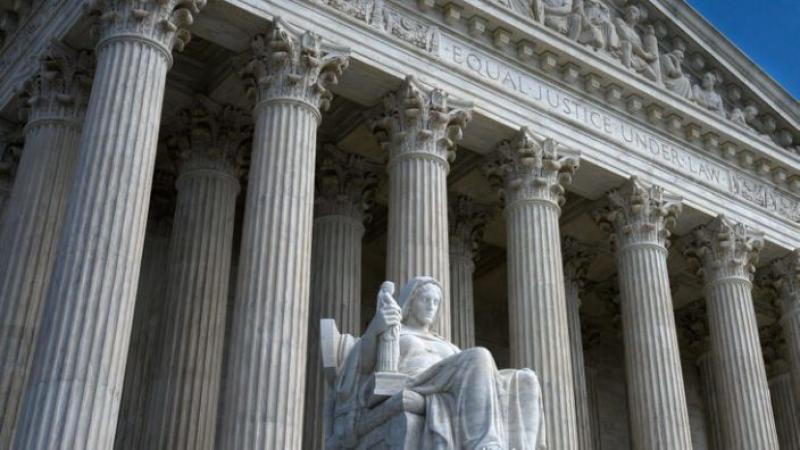
Religious conservatives asked the Supreme Court Wednesday to overturn 38 state constitutional amendments and require taxpayers to fund religious schools.
You read that right. The case, Espinoza v. Montana Dept. of Revenue isn’t about whether a state may fund religious schools through a school choice, voucher, or similar program. It’s about whether it must .
And the conservatives might just win.
At issue in the case, probably the most significant church-state case on the 2019-20 docket, is Montana’s “no-aid” amendment to its state constitution, which was revised and passed in 1972. Like similar amendments in 37 other states, it prohibits “direct or indirect funding” for any “sectarian purpose.”
In 2015, the state legislature passed a law that gave a tax credit of up to $150 for donations to a school scholarship program. But in 2018, the Montana Supreme Court struck down the program, saying it violated the 1972 constitutional provision.[JM1]
That’s when a group of religious organizations upped the ante. They went to the Supreme Court, seeking not just to reinstate the program but to toss out the “no-aid” amendment entirely – and, as a consequence, invalidate 37 similar amendments across the country.
That would open the floodgates to the funding of religious schools, especially since the plaintiffs argue that not funding them—previously the constitutional norm—is actually a form of discrimination.
As in many of these cases, how Espinoza looks depends on how you frame it.
For conservatives, this is discrimination. If I want to send my child to a secular private school, I can receive funding (or a voucher, or a scholarship, or whatever). But if I want to send her to a religious one, I can’t.
Moreover, the religious groups accurately note , “no-aid” amendments were originally passed in a wave of anti-Catholic, anti-immigrant animus in the 1870s and 1880s. They’re sometimes called “Blaine Amendments,” after Rep. James Blaine, a leading Republican [JM2] of his day who proposed a federal constitutional amendment banning such funding. That effort failed, but numerous “Baby Blaine” amendments passed on the state level.
Today, they may seem like liberal walls between church and state. But 150 years ago, they were motivated by anti-Italian, anti-Irish, and overall anti-Catholic prejudice. (Even the word “sectarian” as opposed to “religious” was code for Catholic.)
For liberals, however, public funding of religious schools is blatantly unconstitutional.
Randi Weingarten, president of the American Federation of Teachers, said on a press call prior to the case that “it’s a total and utter perversion of the Constitution… to mandate support for a particular religion.”
The justices seemed divided at oral argument.
Justice Stephen Breyer seemed concerned that if the plaintiffs win here, states would have to radically restructure how they fund education. After all, isn’t it discrimination to fund public, secular schools more than private religious ones?
(Incidentally, RBG fans can take heart: Justice Ruth Bader Ginsberg was as lively and combative as ever, and focused on whether the Court should even be hearing the state constitutional challenge in the first place.)
But Justices Brett Kavanaugh, Samuel Alito, and Neil Gorsuch suggested that ruling for the plaintiffs wouldn’t represent such a radical change. Even if the no-aid amendments are wiped out, states would still be free not to fund private education in general. It’s only when states choose to fund some private education that they must make funding available to both religious and secular institutions.
Oddly, the practical result of that position isn’t very different from that of the Montana supreme court, which tossed out the program in toto . Except that the conservative justices’ position might well overturn 37 state constitutional amendments in the process.
Chief Justice John Roberts, working on very few hours’ sleep after presiding at the impeachment trial of the president, said a bit less than usual, though he did crack two jokes. But if the case splits on ideological lines, Roberts will again find himself as the deciding vote.
Which way will he go? Recent cases, including the 2017 case of Trinity Lutheran Church v. Comer , suggest he may favor the religious plaintiffs.
In Trinity Lutheran , Roberts was able to win over Justices Elana Kagan and Breyer, and the Court voted 7-2 to uphold a program that made state money available to private schools – religious and secular – for playground renovations. Chief Justice Roberts wrote the opinion narrowly, but his language still made clear that he views these cases as about discrimination against religious people, rather than public funding of religious organizations.
The First Amendment, he wrote, allows a state “to extend that public benefit to all its citizens regardless of their religious belief.” And denying funds to the religiously-affiliated school “expressly discriminates against otherwise eligible recipients by disqualifying them from a public benefit solely because of their religious character.”
That would suggest a ruling for Espinoza and the other religious plaintiffs here. If this case is about discrimination, the plaintiffs win.
The trouble with this supposedly “moderate” result is that Montana’s program is actually more modest than many of the “school choice” programs promoted by, among others, Education Secretary Betsy DeVos and her family’s multi-million-dollar foundations.
Montana, after all, only offered a $150 tax credit for donors to an overall pool of money. (Indeed, it seems designed to gradually push the boundaries of constitutional law.) What about states that would grant a dollar-for-dollar tax credit up to the total amount of a private school tuition?
For example, full-price tuition at one of the Montana religious schools in the case runs between $6,900 and $8,700. That’s far more than most people pay in state taxes.
So if Montana’s more modest program is reinstated and the no-aid amendments are struck down, other, less modest programs could easily be put into place. The result could be a massive shift in revenue from state coffers to the bank accounts of religious schools.
That would, of course, please DeVos and other religious conservatives, but it would also starve public education.
Moreover, while the Blaine Amendment was indeed motivated by discriminatory animus, Montana’s own “no-aid” amendment was passed in 1972 when the constitution as a whole was rewritten. In its filings with the Supreme Court, the state quoted several participants from those debates; they denied that any anti-religious animus was at play, and, on the contrary, noted that many religious leaders wanted the amendment in order to keep government out of religious schools’ business.
That revised constitution passed 80-17.
Finally, religious conservatives’ argument in Espinoza flies in the face of conservatives’ usual promotion of federalism and states’ rights. When states seek to restrict voting access, allow discrimination against LGBT people, or ban abortion, “states’ rights” is a right-wing rallying cry. But now, when 37 states prohibit taxpayer dollars from flowing to religious institutions, suddenly it’s not that important.
In a way, the Espinoza case is an apt reflection of how religious conservatives (including many extremists ) have benefited from their support of Trump . Most eyes are focused on Chief Justice Roberts’s other job of the moment, with its high drama and political machinations. But while Trump’s antics deservedly get the spotlight, just out of view are a group of well-funded religious conservatives who are totally remaking church and state in America.
They most likely scored another victory today.
Tags
Who is online
99 visitors
Once upon a time, in a land far far away there was a young girl.
She never succeeded in mastering reading, writing and arithmatic.
Unable to obtain no less hold down a non skilled job, her wealthy parents donated a lot of money.
In exchange she was given a position where it made no difference.
She was hired as the Secretary of Education by her national government.
And every lived happily ever after.
The end.
Theo Seuss, P.hD.
Where did you get the absurd idea that wealthy parents can get their stupid kids into the best of schools.
How about Rick Singer's school of scandal where the rich of all political and religious stripes bribed their way into the colleges of their choice for their kids.
Felicity Huffman, Lori Loughlin et.al., ?
That idea didn't exist in a vacuum, it grew from parents being generous to the private schools of their choice for their kids
and blossomed into a college admissions scandal.
Shirly (or Laverne), you jest.
At the very least.
You can bring a horse to water but you can't make him think.
Lori Laughlin did. She got busted but she did get her "stupid kids" into a top school thanks to hers and her husband's wealth.
One daughter even went on line and stated that she was there for the party experience and could have cared less about getting an education.
That is what we got when Trump nominated a Secretary of Education, Devos, who is fundamentally opposed to the historic mission of the US Department of Education. Public Education is a bedrock of American success and the anchor of our freedoms. Those tearing away at the foundations of our free public school system are sabotaging America's future and the future success of millions of America's less fortunate children...
matters not what liberals think about it.
Do we really have people that want states trampling on our constitutional rights?
Ah yes, Public Education.
A true Third Rail of politics in the USA
Sad
I used to work at a private school, they do not deserve public funds
I couldn't agree with you more.
Yes, i'd like to hear both your reasons as well.
All things remaining equal, a person paying for public school gets ripped off by comparison if they choose to send their kid to private school. I've actually got no problem not using public funds for private schools as long as the folks choosing to sending their kids to private school don't pay the same taxes towards public schools as people taking advantage of public schools.
By your logic, I shouldn't have to pay any school taxes, since I don't have kids.
You got that right
It's pretty simple really. It would likely involve a tax break for the private school parent.
No need to make it more complicated than that.
Then I could get a tax break too, since I don't have kids and shouldn't be paying for any child's education. Right?
Okay, but lets not stop there.
How about people with more kids paying more? So we could have a family with 12 kids pay say 12 times more than a family with one kid. Thus following your logic.
Would that be okay with you?
yes, there is now a problem with overpopulation.
That's fine by me too. If someone wants lots of kids, they pay for them.
To both of you, that will never work. Too many people can't afford to pay for a couple of kids let alone 12.
So how do you fix that problem if everyone is expected pay for their own kids regardless of the school they go to?
Public schools, supported by taxpayers. If you don't have kids, or if you have kids but don't want to send them to public schools - oh well, you still pay school taxes. You know, how it currently works.
But you can't propose a tax break for the private school parents because they're not utilizing the public schools, without also giving a tax break to people who don't have kids and therefore don't utilize the public schools.
Well then, they probably shouldn't have 12 kids.
Oh, I have no problem with some of my taxes going to support public education; I'm a huge fan of education. I was making a different point.
Same. As a business owner, I would prefer to be able to hire educated employees. I am therefore quite willing to pay taxes to support public education. Their religious persuasions are none of my concern, and I will neither hinder nor support them in those pursuits.
Why not? You're doing it now with public schools if you have no kids. I don't see you arguing to not have to support Public schools if you have no kids. People with 12 kids are paying no more than people with one if they have the same taxable values in their families. Why are you so against people of faith and their schools or other private schools? Simply because you don't agree with them? So much for everyone getting their chance to pursue their own happiness right? I guess they can pursue it but only as long as you agree with it.
Got it .....
I agree but hell bells, why stop there? We could institute a China like rule where everyone could only have one point five kids max. Yep, that would be great in the land of the free and the brave!
Because private schools aren't subject to the same regulations as public schools. If they're going to take taxpayer dollars, they have to be subject to certain controls that they aren't currently being held responsible for.
We (I) have already agreed here, to receive public money they would have to be. And its not like many already aren't.
There are many fantastic private schools out there outperforming public schools in almost every measurable educational category.
The public system tends to hate that. No doubt about it.
That's because it's a conundrum. Public schools can't succeed if we siphon off the money to private schools. And while there are some great private schools, there are also some terrible ones, and the government can't really do much about it. Charter schools have been a major failure in many places, for example.
But again, once we subject the private schools to the same controls - they are now public schools. So what is the point then? Too bad we can't have different styles of learning in our schools, so that every kid isn't forced into the same learning model which doesn't work for many of them. But every new thing seems to flame out - remember the open classrooms that were all the rage? They worked for some but failed for a lot of kids.
And really, without more parental involvement, schools can only do so much no matter how much money we throw at them. If you don't teach your child that reading is important and that learning is valuable, if you come home and pop open a six pack every night and watch reality TV, your kids are not in shape to get the most from their education. And if you don't teach your children morals and values, the school's time is spent more on discipline and it affects everyone's learning experience.
Exactly.
What's your point? Public schools have been failing our kids for decades in many places. Charter/Private schools didn't start popping up everywhere because everything was hunky dory in the public school system. They started popping up because in many places Public schools were and are failing our kids. That WOULD NOT be happen if everything in Public education was all good.
No they aren't. Are you suggesting one of those "controls" is mandatory participation in union labor? I know i'm not. Its one of the reasons new private schools are popping up everywhere. Issues with union labor.
All of that is true regardless if kids are going to public or private schools so i don't really see any cogent points there.
And everything isn't hunky dory in the private or charter school systems, either - particularly charter schools. Obviously we haven't figured it out, regardless of how it's funded.
In my state, participation in the teachers' union is not mandatory.
I never said it was. The point i was making was that if Public schools were doing their jobs well many private and charter schools would never have existed. You can't point out the problems with one without pointing out the causality of the other
Pretty sure in my state all Public system school teachers are union but i'm not 100% on that.
I don't think any state forces teachers to join the union. But about half the states force teachers to pay union dues even if they choose not to join (mine does not).
As we saw with Trinity, if the school is just doing what other schools do, there shouldn't be discrimination.
We're still going to end up in court until the end of time on this stuff, because there is never going to be a bright line defining secularism and sectarianism in the schools. Is there a substantive difference between a teacher with a cross around her neck, a cross on the wall, or a cross on a jersey? Does that have anything to do with curriculum? We can debate this stuff endlessly.
First off, the original case was thrown out along with the law that brought it, so according to some precedent, they shouldn't even be taking the case.
Second, now I find it ironic that all the sudden conservative people are against state rights.
This would be taking away public funds for public schools to fill private coffers. That people cheer this on shows me their priorities do not lay with the children that need the funds the most.
This whole thread reads like conservative people are on this bandwagon just because it is happening under a trump administration. Some are not thinking about what this would actually do (or do not care) and are going to defend anything trump, no matter what.